


As a supplier of Laser Guided Heavy Load AGVs, I often get asked about the heat dissipation performance of these amazing machines. So, let's dive right in and explore what makes their heat dissipation tick.
First off, let's understand why heat dissipation is such a big deal for Laser Guided Heavy Load AGVs. These AGVs are designed to carry heavy loads over long distances and operate for extended periods. All that work generates a significant amount of heat. If the heat isn't properly managed, it can lead to a whole host of problems. Components can overheat, which reduces their lifespan and can even cause system failures. And in a heavy - load environment, a system failure can be a real headache, leading to downtime and lost productivity.
One of the key factors in heat dissipation is the power source. Most Laser Guided Heavy Load AGVs are powered by high - capacity batteries. These batteries produce heat during charging and discharging. For example, lithium - ion batteries, which are commonly used, can generate a fair amount of heat, especially when they are being charged at a high rate or when the AGV is under heavy load. To deal with this, we use advanced battery management systems that monitor the battery temperature. If the temperature gets too high, the system can adjust the charging rate or even activate cooling mechanisms.
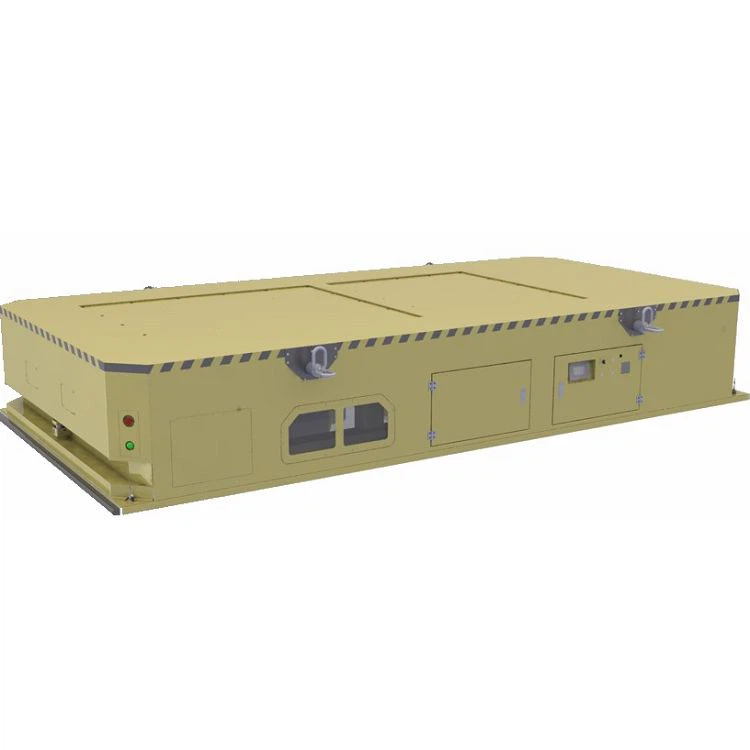

The motors in these AGVs are another major source of heat. The motors have to work hard to move the heavy loads, and this mechanical work is converted into heat. We use high - efficiency motors that are designed to minimize heat generation. But even with efficient motors, some heat is still produced. That's where cooling systems come in. We typically use a combination of air - cooling and liquid - cooling systems.
Air - cooling is a simple and effective way to dissipate heat. Fans are installed near the motors and other heat - generating components. These fans blow air over the components, carrying away the heat. The air circulation helps to keep the temperature in check. However, air - cooling has its limitations, especially in high - temperature environments or when the AGV is operating at full capacity for a long time.
That's when liquid - cooling systems come into play. Liquid - cooling systems use a coolant, usually a mixture of water and antifreeze, to absorb the heat from the components. The coolant is circulated through pipes that are in contact with the heat - generating parts. As the coolant absorbs the heat, it is then pumped to a radiator, where the heat is dissipated into the surrounding air. Liquid - cooling is more efficient than air - cooling and can handle higher heat loads.
Now, let's talk about the impact of the AGV's design on heat dissipation. The layout of the components inside the AGV is crucial. We design our Laser Guided Heavy Load AGVs in a way that allows for proper air circulation. There are clear channels for air to flow through the AGV, which helps to carry away the heat. Also, we use heat - conductive materials in the construction of the AGV. These materials can transfer heat more effectively from the components to the outer surface of the AGV, where it can be dissipated into the air.
Another aspect to consider is the operating environment. If the AGV is operating in a hot and humid environment, the heat dissipation becomes even more challenging. In such cases, we can customize the cooling systems to meet the specific requirements. For example, we can add more powerful fans or larger radiators to improve the heat - dissipation capacity.
When it comes to the reliability of our heat - dissipation systems, we conduct extensive testing. We test our AGVs in different operating conditions, including high - temperature environments and heavy - load scenarios. This ensures that the heat - dissipation systems can perform effectively under real - world conditions.
In addition to the standard heat - dissipation features, we also offer optional upgrades for customers who have specific requirements. For example, some customers may need their AGVs to operate in extremely high - temperature environments. For these customers, we can provide enhanced cooling systems that are specifically designed to handle such conditions.
Now, let me tell you about some of the other types of AGVs we offer. We also have Omni Direction AGVs, which are known for their high maneuverability. These AGVs can move in multiple directions, making them ideal for complex assembly line operations. And then there are Unmanned Conveyor AGVs, which are great for transporting materials along a fixed path. We also have Natural Navigation Automated Guided Vehicles, which use advanced navigation technology to operate without the need for fixed guides.
If you're in the market for Laser Guided Heavy Load AGVs or any of our other AGV products, we'd love to have a chat with you. Whether you have questions about the heat - dissipation performance or any other aspect of our AGVs, our team of experts is here to help. We can work with you to understand your specific needs and provide the best solution for your business. So, don't hesitate to reach out and start a conversation about how our AGVs can improve your operations.
References:
- Industry reports on AGV technology and heat management
- Internal research and development documents on our AGV products


