


Heavy Load AGV
Tianjin Lonyu Robot : Your Trustworthy Heavy Load AGV Supplier!
Our company is a heavy-duty AGV company with the business philosophy of focus, professionalism, pragmatism and development. Langyu has been committed to professional R&D and production in the field of heavy-duty AGV and smart factory smart logistics. We have more than 50 patents (9 invention patents) and specialize in providing customers with heavy-duty intelligent logistics management systems supported by intelligent logistics technology, industrial Internet of Things, big data center and other technologies to solve the problem of intelligent transportation materials for large goods.
Products Widely Used
The products produced by our company can be widely used in the production, assembly, transportation and production of large workpieces (over-length, over-weight) in aviation, aerospace, military industry, high-speed rail, wind power, metallurgy, engineering machinery, ships, ports, airports, heavy industry and other industries. store.
Innovating
Our company has more than 50 patents, including 9 invention patents. Secondly, we have 131 independent core patents. And most of the products have passed CE, REACH, SGS, FCC and other certifications.
Customizable
Our team has 15 years of professional R&D and production experience in the field of smart logistics and can meet the needs of different markets and customers.
Wide Range of Cooperative Merchants
Since its establishment, our company has cooperated with well-known companies around the world, such as Tesla, Siemens, FAW Toyota, Jinfeng Technology, CAT, JLG and other well-known companies.


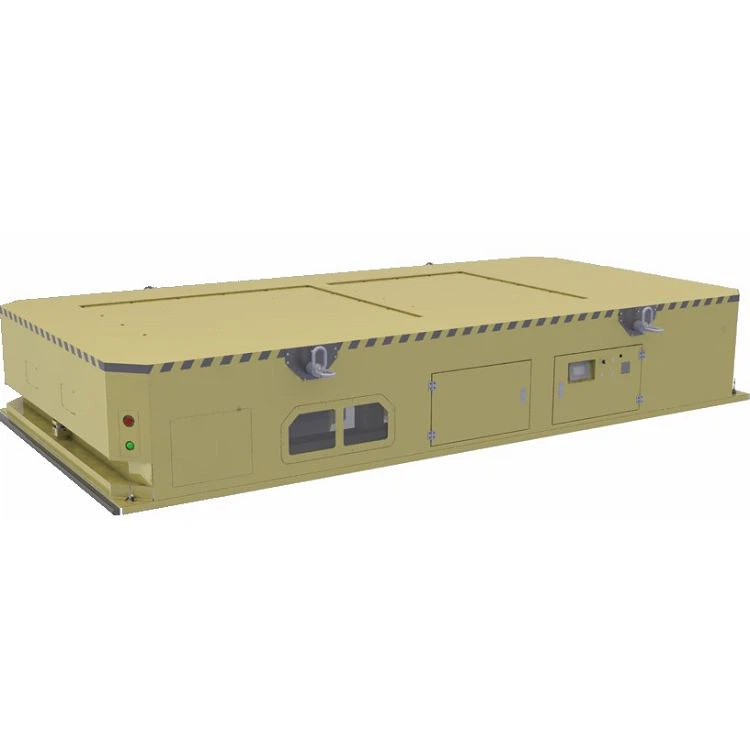
A Heavy Load Automated Guided Vehicle (AGV) is a type of material handling equipment that is designed to transport heavy loads within a plant or warehouse without the need for human intervention. These vehicles are capable of carrying loads that weigh several tons and can navigate through narrow aisles and complex pathways using sensors, cameras, and other advanced technologies. Heavy load AGVs are widely used in industries such as automotive, aerospace, logistics, and manufacturing for their ability to improve efficiency, safety, and productivity in material handling processes.
Features of Heavy Load AGV
Better Efficiency
An AGV will travel to its destination at a set speed, faster than if the movement was conducted manually, or by pedestrian operated equipment by a person who could be delayed or distracted.
Movement and Flexibility
The Heavy Load AGV can not only travel freely forward, backward, left, and right, but also can achieve various movement modes such as circular motion and diagonal movement, and can adapt to various complex transportation scenarios. At the same time, its steering is flexible and it can change the direction of travel at any time, which makes its operation in narrow spaces more flexible.
Autonomous Navigation
Heavy Load AGV uses a variety of navigation technologies such as lidar and vision systems to achieve autonomous navigation without manual intervention, thereby improving operational efficiency and accuracy.
High Security
Heavy Load AGV can autonomously avoid and identify obstacles, and adjust its driving path in time to avoid collisions. In addition, it is equipped with a variety of safety systems, including protective covers, safety sensors, emergency stop buttons, etc., which can stop the vehicle in time in an emergency.
Automated Guided Carts
An AGC is a basic AGV system with limited automation where it follows a painted strip on the floor to move along a pre-determined path to perform repetitive actions. AGV carts are often used in sorting, storage, and cross-docking applications to reduce labour costs.
Unit Load Carriers
These AGV transfer carts are designed to carry specific parts or products with custom tooling to carry a pallet or tote loaded with multiple items.
Heavy Towing Carriers
These heavy load AGV’s are used for transporting substantial cargo over longer distances within a large facility without the assistance of an operator, following a set path. This path can be altered simply by reorienting the floor tape or paint that the AGV follows.
Forklift and Towing AGVs
Towing AGVs are automated guided vehicle robot carts designed to act as stock robots for warehousing, pulling orders from heights with forks or other special tooling created for the specific application.
Tugger AGVs
A tugger AGV pulls heavy loads from point A to point B employing trailers filled with product or parts. These tugger automated guided vehicles can have several pre-determined stops while moving through a plant, factory, or warehouse.
Parts of Heavy Load AGV
Frame
The heavy-duty AGV frame is the main structure of the vehicle. It is designed to support the weight of the load and withstand the stresses of the operating environment. The frame is usually made of steel and reinforced to increase its strength and durability.
Drive System
The drive system is responsible for pushing the AGV along a fixed path. It includes the motor, gearing and wheels. AGVs can be powered by a variety of sources, such as batteries, diesel engines, or gasoline engines. Some AGVs use a combination of these sources to ensure optimal performance.
Control System
The control system is the brain of AGV. It coordinates all vehicle functions, including steering, braking, speed control and load handling. The control system uses sensors and software to enable the AGV to navigate along a predetermined path and avoid obstacles.
Load Handling System
The load handling system is responsible for loading and unloading heavy objects onto the AGV. It includes hydraulic arms, conveyor belts and clamps. Load handling systems can be customized to meet specific load requirements and can be adjusted to handle different types of loads.
Security System
The safety system is designed to ensure the safe operation of the AGV. It includes various sensors such as laser scanners, cameras and ultrasound equipment. These sensors detect potential collisions with other vehicles, objects or people and alert the control system to slow down or stop the AGV. Additionally, the safety system includes an emergency stop button that allows the operator to stop the AGV in an emergency.
Benefits of Using Heavy Load AGV

Fewer Employees
The use of Heavy Load AGVs means that non-value-added transport tasks can be automated. This solves the problem of lack of skilled workers and saves costs. For manually controlled logistics vehicles, the personnel required alone account for around 80% of the overall cost.
Continue to Operate
Additionally, the Heavy Load AGV can be used 24/7. To achieve this, the material flow is optimized as part of the automated process, significantly increasing overall processing capacity.
Lower Error Rate
Heavy Load AGVs also improve the safety of cargo handling. The result is reduced error and accident rates in warehouses, thereby reducing costs caused by damage to goods or building infrastructure.
Working Principle of Heavy Load AGV
Navigation System
The navigation system of heavy-duty AGV is usually composed of sensors, lasers and cameras. These tools work together to help the AGV map its environment and determine the best path. This system is crucial to ensure that the AGV can pass through tight spaces and around obstacles without colliding with anything.
Load Capacity
Heavy-duty AGVs are designed to carry large and bulky loads. This is achieved through the use of powerful motors and a sturdy frame that can withstand the weight of the load. Some of the most common loads carried by these AGVs include pallets, steel plates, and heavy machinery.
Multi-Wheel Steering
Heavy-duty AGVs often use multi-wheel steering to provide enhanced maneuverability. This means the AGV can turn in a smaller radius than a traditional forklift or other material handling equipment. This makes AGVs ideal for use in narrow aisles or tight spaces.
Security Features
When working with heavy loads, safety is always the top priority. AGVs are equipped with various safety features that help prevent accidents. These features include sensors that can detect obstacles, emergency stop buttons and warning lights.
Central Control System
Finally, the AGV is controlled by a central control system. The system monitors the movement of the AGV and can make adjustments in real time to ensure that the AGV moves safely and efficiently. The system can also communicate with other equipment and systems in the facility to coordinate movement and ensure the AGV is operating at optimal performance.
Load Demand
Before purchasing a heavy-duty AGV, you need to determine the maximum weight of the required load and reserve a certain margin. It is recommended to choose an AGV that is large enough to accommodate future load increases and production line expansion needs. When selecting the load capacity, you also need to determine the location of the load point to ensure safe and stable transportation.
Robot Type
Heavy-duty AGVs are generally divided into different types, including follower, fixed and guided robots. Follower robots need to follow people or other carriers for transportation, while stationary robots can only operate in fixed areas or paths. Guided robots can drive autonomously through preset paths. When selecting the type of robot, the adaptability and operating efficiency of the production line need to be taken into consideration.
Power System
The power system of AGV includes batteries, hydrogen fuel cells and supercapacitors. Selecting the appropriate power system should take into account factors such as transportation distance, transportation load, and production line environment. Batteries are the most common power system, but hydrogen fuel cells also have advantages in some industrial sectors. Supercapacitors are suitable for short-distance high-power transportation.
Automation Level
Heavy-duty AGVs can achieve varying degrees of automation. When choosing, you need to consider the degree of automation of the production line and the usage scenario of the AGV. If the production line is not fully automated, there is no need to choose an AGV that is too high-level.
Safety and Reliability
Safety and reliability need to be considered during transportation of heavy-duty AGVs. You need to choose an AGV with safety mechanisms such as obstacle avoidance, autonomous navigation and fusing. In addition, quality and service are also important factors in ensuring safety and reliability.
Determine Material Handling Tasks
The first step is to determine the material handling tasks that a heavy-duty AGV can perform. The marking should also include the type of load the AGV can handle and the distance it can travel. Once the mission is identified, the next step is to program the AGV to perform that mission.

Programming the AGV
AGVs need to be programmed to perform designated material handling tasks. This programming can be done via the AGV’s control panel or computer system. The AGV should be programmed to follow a defined path, pick up the load and deposit it to its destination.
Safety Precautions
It is crucial to consider safety precautions when using heavy-duty AGVs. AGVs should be equipped with safety sensors capable of detecting any obstacles in their path. The AGV should also have an emergency stop button that can stop the AGV in an emergency.
Maintenance
Regular maintenance and cleaning of your AGV is important to ensure its longevity and smooth operation. Batteries need to be recharged when needed, and any worn parts should be replaced.
Training
Operators must be trained on how to operate heavy-duty AGVs and follow safety procedures. This training includes understanding the AGV manual (including its control panel) and troubleshooting procedures.
How to Maintain Heavy Load AGV

Cleaning
Heavy-duty AGVs are in industrial production environments and often undertake heavy-duty tasks, so a large amount of dust and dirt will be generated during operation. These substances may accumulate inside and outside the machine, affecting the performance and life of the equipment. Therefore, it is necessary to clean the inside and outside of the machine regularly to ensure the normal operation of the equipment.

Regular Inspection and Replacement of Parts
The longer the heavy-duty AGV is used, the higher the wear rate of parts. If not replaced in time, the stability of the equipment will be affected. Therefore, regular inspection and replacement of parts is very necessary. For particularly important parts such as batteries, motors, etc., it is necessary to develop the habit of regular replacement every quarter and year.

Pay Attention to the Ambient Temperature
The operating temperature of heavy-duty AGV is very important. Temperatures that are too high or too low will affect the service life and performance of components such as motors and batteries. Especially in summer, when the machine operates for a long time, special attention needs to be paid to the ambient temperature to avoid the impact of an overheated environment on the equipment.
Adjust Tires and Navigation Controls
When a heavy-duty AGV operates in a working environment for a long time, the tires and navigation control system may deviate. In order to ensure the accuracy and stability of the equipment, the tires and navigation control system need to be recalibrated before the equipment starts working.
Applications of Heavy Load AGV
Logistics Field
In the field of logistics, heavy-duty AGVs are widely used in the transportation and warehousing of goods. For example, in warehousing centers, heavy-duty AGVs can realize automated transportation, storage and picking of goods through automated path planning and navigation. This not only improves the efficiency of logistics operations, but also effectively avoids losses caused by human factors.
Manufacturing
In the manufacturing industry, heavy-duty AGVs can assist in the transportation of materials or the assembly of parts and finished products. Heavy-duty AGV is highly flexible and can be customized according to different production processes and site environments, so that it can quickly adapt to complex production environments and improve production efficiency and quality.
Medical Field
In medical institutions, heavy-duty AGVs are used for automated delivery of medical devices and drugs. Incorporating heavy-duty AGV into the medical system can greatly improve the delivery efficiency of drugs and medical consumables, reduce hospital operation and management costs, and reduce reliance on manpower and reusability.

Certificate


Frequently Asked Questions
Q: What is a Heavy Load AGV?
Q: How much weight can a Heavy Load AGV carry?
Q: What industries commonly use Heavy Load AGVs?
Q: What are the advantages of using Heavy Load AGVs?
Q: How do Heavy Load AGVs navigate without human input?
Q: Can Heavy Load AGVs be programmed to follow specific paths?
Q: How do Heavy Load AGVs avoid obstacles?
Q: How do Heavy Load AGVs communicate with other machines or humans?
Q: Are Heavy Load AGVs equipped with sensors and cameras?
Q: What is the maximum speed that a Heavy Load AGV can travel at?
Q: Is it possible to control multiple Heavy Load AGVs from one central location?
Q: How do Heavy Load AGVs recharge their batteries?
Q: What is the lifespan of a Heavy Load AGV?
Q: Can Heavy Load AGVs operate in harsh environments?
Q: What type of maintenance is required for a Heavy Load AGV?
Q: How does a Heavy Load AGV handle uneven surfaces?
Q: Can Heavy Load AGVs work in tandem with human operators?
Q: What is the cost of a Heavy Load AGV?
Q: How long does it take to implement Heavy Load AGVs in a facility?
Q: What is the future of Heavy Load AGVs, and how will they evolve over time?