


Omni-Directional Lift AGVs
Tianjin Lonyu Robot : Your Trustworthy Unmanned Conveyor AGVs Supplier!
Our company is a heavy-duty AGV company with the business philosophy of focus, professionalism, pragmatism and development. Langyu has been committed to professional R&D and production in the field of heavy-duty AGV and smart factory smart logistics. We have more than 50 patents (9 invention patents) and specialize in providing customers with heavy-duty intelligent logistics management systems supported by intelligent logistics technology, industrial Internet of Things, big data center and other technologies to solve the problem of intelligent transportation materials for large goods.
Products Widely Used
The products produced by our company can be widely used in the production, assembly, transportation and production of large workpieces (over-length, over-weight) in aviation, aerospace, military industry, high-speed rail, wind power, metallurgy, engineering machinery, ships, ports, airports, heavy industry and other industries. store.
Innovating
Our company has more than 50 patents, including 9 invention patents. Secondly, we have 131 independent core patents. And most of the products have passed CE, REACH, SGS, FCC and other certifications.
Customizable
Our team has 15 years of professional R&D and production experience in the field of smart logistics and can meet the needs of different markets and customers.
Wide Range of Cooperative Merchants
Since its establishment, our company has cooperated with well-known companies around the world, such as Tesla, Siemens, FAW Toyota, Jinfeng Technology, CAT, JLG and other well-known companies.
Related Product Introduction

Omni Directional Automated Guided Vehicles (AGVs) are robotic vehicles that can move in any direction and rotate on their own axis. These AGVs are equipped with multi-directional wheels or rollers that allow them to move sideways, diagonally, or in circular paths, as well as forward and backward. This makes them highly versatile and suitable for applications in manufacturing, warehousing, and logistics, where they can move materials and products with precision and efficiency. Omni-directional AGVs often use advanced navigation systems such as laser sensors, vision systems, and magnetic guidance to navigate complex environments and avoid collisions with obstacles.

All Direction Heavy Load AGVs refer to a type of Automated Guided Vehicle (AGV) that is designed to carry heavy loads in any direction. These AGVs are equipped with omnidirectional wheels that allow them to move in any direction, including sideways, diagonally, or even rotating around a central point. They are commonly used in factories, warehouses, and other industrial settings to transport heavy loads such as metal sheets, large machinery, or palletized goods. All Direction Heavy Load AGVs offer high flexibility and can navigate through tight spaces and crowded areas without requiring any human assistance.

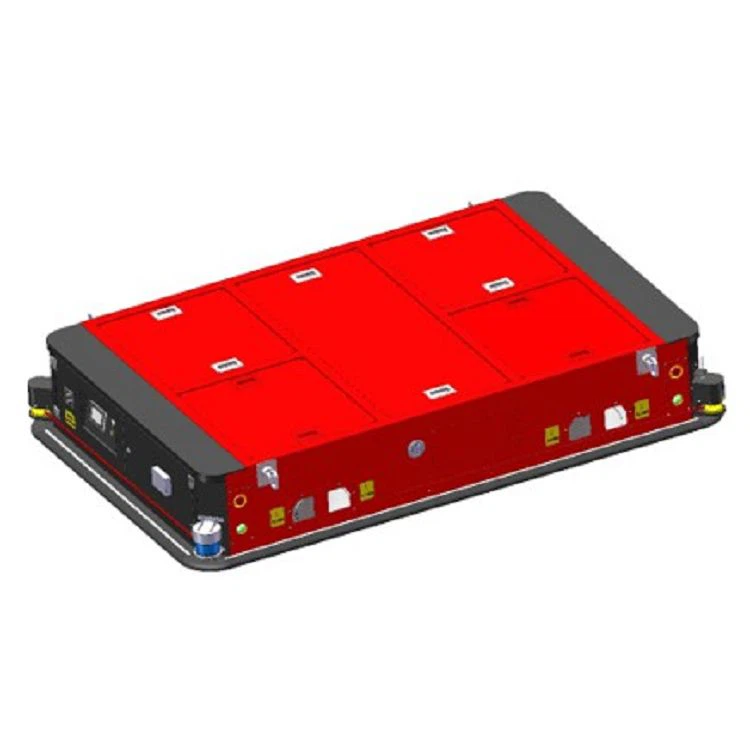
Omni-Directional Lift AGVs are a type of Automated Guided Vehicles (AGVs) that are capable of moving in any direction and can also lift and transport materials and products. These AGVs use a combination of robotics, sensors, and software to navigate and communicate with their surroundings, allowing them to follow pre-programmed routes or adapt to changing environments. The lift feature allows them to pick up and transport heavy materials, saving time and reducing the risk of injury to human workers. These AGVs are commonly used in manufacturing facilities, warehouses, and distribution centers to improve productivity and efficiency.

Flexible Assembly Line AGV stands for "Automated Guided Vehicle" and refers to a robot that is designed to transport items and materials along a flexible assembly line. These types of AGVs are useful in industrial manufacturing settings where the production line may need to be reconfigured or reorganized frequently. They are equipped with sensors and guidance systems that allow them to navigate the assembly line and carry out tasks such as transporting components, delivering products, and assisting with assembly or disassembly processes. The flexibility of the AGV allows it to adapt to changes in the production line and help streamline manufacturing processes, increase efficiency and minimize human errors.

Laser-guided heavy load AGVs are a type of automated guided vehicle (AGV) that uses laser guidance systems to navigate and transport heavy loads within a facility or warehouse. These vehicles are designed to handle large, bulky materials or equipment that may be difficult to move manually. The laser guidance system consists of a transceiver that sends out laser signals which are received by sensors on the AGV, allowing it to precisely follow a set path and avoid obstacles in its path. This technology not only provides precise navigation, but also ensures safety for both the vehicle and its surroundings. Laser-guided heavy load AGVs are commonly used in industries such as automotive, aerospace, and manufacturing where there is a need to transport heavy loads quickly and efficiently.

Natural Navigation Automated Guided Vehicles
Natural Navigation Automated Guided Vehicles (AGVs) are vehicles that use natural navigation technology to move around an environment without relying on pre-installed infrastructure or external navigational aids. These vehicles use sensors and algorithms to navigate using natural features such as walls, floors, and ceilings, and can adjust their movements based on changes in the environment such as obstacles or shifting surfaces. Natural Navigation AGVs are commonly used in manufacturing and logistics settings to transport materials and products around a facility, and are known for their flexibility and adaptability to changing environments without the need for costly modifications.

Magenetic Strip Navigation AGVs
Magnetic strip navigation AGVs are autonomous guided vehicles that use magnetic strips on the floor to navigate and follow a specific path. The magnetic strips emit a magnetic field that is detected by sensors on the underside of the AGV. The AGV follows the path set by the magnetic strips, and can be programmed to stop, start, turn, and even park in designated areas. Magnetic strip navigation AGVs are commonly used in industrial settings, such as manufacturing plants, warehouses, and distribution centers, to transport materials and products autonomously.

Mobile Production Line AGVs (Automated Guided Vehicles) are autonomous vehicles that traverse along a predetermined path in a production line of a manufacturing facility, carrying materials, components, and finished products to the required destination. They are designed to operate in a dynamic environment, where they work alongside employees and other production processes in a seamless and efficient manner. They are equipped with sensors and navigation systems that allow them to detect obstacles and navigate safely through the manufacturing facility.
Unmanned Conveyor Automated Guided Vehicles (AGVs) are robotic vehicles used in factories and warehouses to transport materials and products from one area to another, without the need for human intervention. They are equipped with sensors and software that enable them to navigate through an environment, avoid obstacles and adjust their speed in response to changes in traffic flow. The unmanned conveyor AGVs are designed to move along a predetermined path, typically a conveyor belt or a designated area on the floor. They can be programmed to pick up and deliver materials automatically, making them a valuable tool for improving productivity and efficiency in manufacturing and logistics operations.
Features of Unmanned Conveyor AGVs
Versatility
Unmanned Conveyor AGVs can be custom designed to suit a variety of different applications, such as handling manufacturing components, pallets or containers. They can be used in a wide range of industries from automotive to healthcare.
Improve Efficiency
Using Unmanned Conveyor AGVs can reduce the time and labor required for material handling, making your facility more efficient. The conveyor system on Unmanned Conveyor AGVs can load and unload materials automatically without manual intervention.


Improve Security
Because Unmanned Conveyor AGVs are driverless, human error is eliminated and the risk of accidents or injuries is reduced. In addition, Unmanned Conveyor AGVs are often equipped with sensors to detect potential obstacles, which further improves safety.
Continue to Operate
The unmanned nature of Unmanned Conveyor AGVs allows for continuous operation as they can work around the clock without the need for breaks or rest periods.

Parts of Unmanned Conveyor AGVs
Steering System
The unmanned AGV realizes forward, backward, left and right turns through the steering system. Steering systems typically include components such as motors, gears, and drive wheels that move the vehicle along a predetermined path.
Navigation and Positioning System
Navigation and positioning systems are one of the key parts of unmanned AGVs. They use sensors, GPS, laser positioning and other technologies to accurately position the AGVs at designated locations to achieve autonomous driving and automated handling tasks.
Control System
The control system is the brain of the unmanned AGV. It is responsible for processing the sensor data provided by the navigation and positioning system and controlling the vehicle. Control systems usually consist of computers and controllers to ensure that the vehicle can perform various tasks correctly.
Storage System
The storage system is the part of the unmanned AGV that stores items. This part usually consists of some boxes or platforms that can be used for storage. These storage parts can also directly carry/unload goods through components such as robotic arms and hooks.
Sensor
The sensor is the sensory organ of the unmanned AGV. They collect important data from the environment and send it to the control system to help the vehicle make informed decisions. Commonly used sensors include cameras, infrared sensors, sonar, etc.
System Monitoring
System monitoring is a monitoring method for unmanned AGV. It monitors the operating status of the system in real time to ensure that it maintains safe and stable operation at all times. Usually it is achieved through network remote monitoring.
Benefits of Using Unmanned Conveyor AGVs

Improved Tracking
AGVs can be equipped with tracking systems that monitor their location and progress within a facility. This allows materials and products to be tracked and coordinated more efficiently.
Enhance Production Line Flexibility
Because AGVs are driverless, they can be quickly and easily reconfigured to adapt to changes in production needs. This flexibility makes production lines run more efficiently and cost-effectively.

How to Choose Unmanned Conveyor AGVs
Determine Purpose and Requirements
The first step in selecting Unmanned Conveyor AGVs is to determine the vehicle's specific use and requirements. This will help determine the size, payload capacity and type of Unmanned Conveyor AGVs required for the job. Factors such as the type of material being transported, the distance traveled and the speed required should be considered.
Determine AGV Type
Unmanned Conveyor AGVs come in different types, including tractors, unit load carriers and conveyor systems. The choice of Unmanned Conveyor AGVs type depends on the size of the load to be carried and the type of route to be taken. For example, when moving materials on a conveyor line, a conveyor AGV is more suitable.
Select Navigation System
Unmanned Conveyor AGVs can use different systems for navigation, such as inertial guidance, laser guidance or magnetic guidance. The choice of navigation system depends on the terrain and environment in which Unmanned Conveyor AGVs operate. For example, laser-guided Unmanned Conveyor AGVs are ideal for environments where accuracy is critical and there are multiple paths.
Consider Security Features
Unmanned Conveyor AGVs must be equipped with safety features to prevent accidents and ensure safe operation. Safety features include sensors that detect obstacles, emergency stops, and warning systems that alert workers to any potential hazards.
Check Body and Structure
The first step is to regularly inspect the AGV's body and structure. This helps identify any physical damage or wear and tear that may affect the vehicle's performance. It is recommended to check the vehicle's frame, tires and battery, mainly when the AGV is used in harsh industrial environments full of debris, dust or liquids.
Check Battery
Regular inspection and maintenance of AGV batteries is crucial. The battery is the heart of the AGV. Any battery problems will affect the performance of the AGV. One way to maintain your battery is to make sure it is charged correctly and the charging station is clean. Cleanliness ensures that the battery is not damaged by dust or debris and that charging is not affected.
Clean Vehicle and Sensors
Over time, dust and dirt can build up on an AGV's sensors, reducing the vehicle's accuracy. This can lead to route errors, delays, and even accidents. To prevent this, it is necessary to clean the sensor regularly. To do this, gently wipe the sensor with a dry, non-abrasive cloth. This ensures that the sensor is not damaged when cleaning it.
AGV Software Maintenance
AGVs are equipped with software that manages their navigation and communications. One way to maintain your software is to update it regularly. Regular updates ensure that the AGV's software remains up to date and running optimally. You can also make sure your AGV's software is working properly by running a full-featured diagnostic test.
Periodic Inspection
Finally, perform regular inspections on the AGV. Regular inspections will help catch potential problems before they become major problems. The inspection should include the electrical systems, mechanical systems, the vehicle's software and sensors, and the vehicle's overall structural integrity.
Material Handling
The main application of unmanned AGV is material handling. They are used to transport materials and products from one location to another within a facility. This is particularly useful in manufacturing and assembly environments where heavy or bulky materials need to be moved quickly and efficiently.
Warehousing
Unmanned AGVs can also be used in warehouses to move goods from one location to another. They can be used to move pallets, crates and boxes around the warehouse, speeding up the process of stocking and picking products.
Food and Beverage Industry
Unmanned AGVs are ideal for the food and beverage industry. They can be used to transport food and beverage products from one location to another, ensuring they are delivered quickly and free from contamination. They are particularly useful in environments where hygiene is a priority.
Automobile Industry
The automotive industry is another industry that benefits from unmanned AGVs. They can be used to move large, heavy automotive parts around manufacturing plants, increasing efficiency and reducing the risk of worker injury.
Certificate


Frequently Asked Questions
Q: What is an Unmanned Conveyor AGV?
Q: How do these AGVs work?
Q: What types of industries use Unmanned Conveyor AGVs?
Q: How do these AGVs benefit businesses?
Q: What are the different sizes of Unmanned Conveyor AGVs?
Q: How are Unmanned Conveyor AGVs designed to handle heavy loads?
Q: How do they charge and maintain their power?
Q: What are the different types of sensors used in these AGVs?
Q: How easy are they to program and configure?
Q: What are the different types of navigation systems used in these AGVs?
Q: How do these AGVs interact with other machines in a production line?
Q: Can they be customized to fit specific business needs?
Q: What are the safety features of these AGVs?
Q: How do these AGVs protect against collisions?
Q: Can these AGVs be used in hazardous environments?
Q: How long does it take to implement a Unmanned Conveyor AGV system?
Q: How do these AGVs fit within a company's existing logistical infrastructure?
Q: What is the future of Unmanned Conveyor AGVs in the manufacturing industry?
Q: How does the cost of these AGVs compare to traditional conveyor systems?
Q: What maintenance is required for these AGVs?
Hot Tags: omni-directional lift agvs, China omni-directional lift agvs manufacturers, suppliers, factory, flexible assembly line infrared agvs, agvs for innovative assembly lines, automated guided vehicles for flexible assembly scanning, flexible assembly line ethernet agvs, agvs for safe assembly lines, flexible assembly line vision agvs
Previous
No InformationYou Might Also Like


Send Inquiry