


Overweight Parts Trans AGVs
Tianjin Lonyu Robot : Your Trustworthy High Capacity AGVs Supplier!
Our company is a heavy-duty AGV company with the business philosophy of focus, professionalism, pragmatism and development. Langyu has been committed to professional R&D and production in the field of heavy-duty AGV and smart factory smart logistics. We have more than 50 patents (9 invention patents) and specialize in providing customers with heavy-duty intelligent logistics management systems supported by intelligent logistics technology, industrial Internet of Things, big data center and other technologies to solve the problem of intelligent transportation materials for large goods.
Products Widely Used
The products produced by our company can be widely used in the production, assembly, transportation and production of large workpieces (over-length, over-weight) in aviation, aerospace, military industry, high-speed rail, wind power, metallurgy, engineering machinery, ships, ports, airports, heavy industry and other industries. store.
Innovating
Our company has more than 50 patents, including 9 invention patents. Secondly, we have 131 independent core patents. And most of the products have passed CE, REACH, SGS, FCC and other certifications.
Customizable
Our team has 15 years of professional R&D and production experience in the field of smart logistics and can meet the needs of different markets and customers.
Wide Range of Cooperative Merchants
Since its establishment, our company has cooperated with well-known companies around the world, such as Tesla, Siemens, FAW Toyota, Jinfeng Technology, CAT, JLG and other well-known companies.
Related Product Introduction

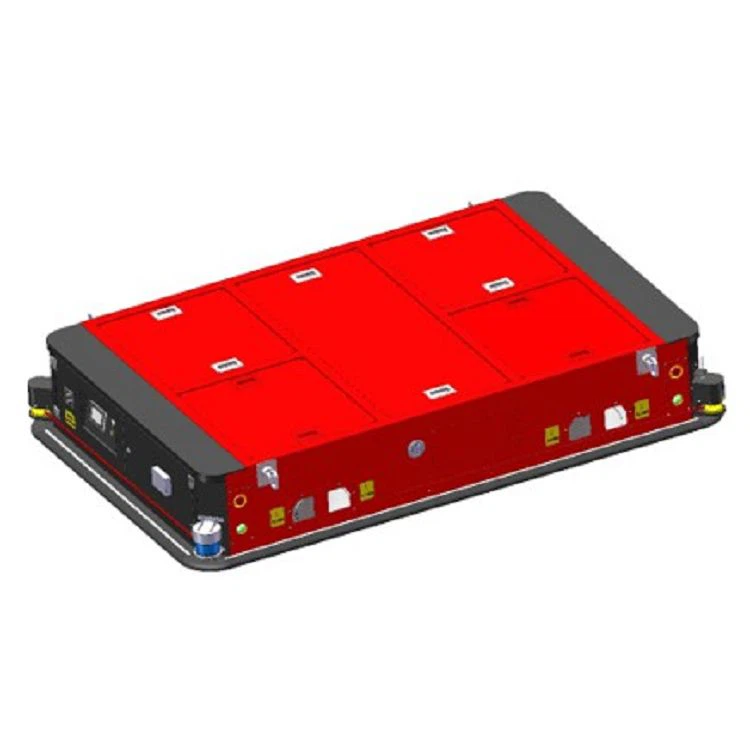
Overweight Parts Trans AGVs (Automated Guided Vehicles) refer to autonomous vehicles that are specifically designed to transport and maneuver overweight and bulky parts within a manufacturing plant, warehouse, or logistics center. These AGVs are equipped with advanced sensors and navigation systems that enable them to navigate through complex environments, avoid obstacles, and ensure the safety of the transported goods. They are widely used in automotive, aerospace, and heavy equipment industries to transport large parts such as engines, gearboxes, and chassis. The use of these AGVs reduces manual labor, improves productivity, and enhances the efficiency of material handling processes.

Backpack heavy-load AGV is an automated guided vehicle that carries heavy loads on its back like a backpack. Its load capacity can reach up to 1000kg or more, which makes it suitable for transporting heavy materials or equipment in warehouses or factories. The vehicle is equipped with sensors and a computerized control system that guides it along predefined paths without the need for a human operator. It can also be programmed to perform various tasks like picking up and dropping off materials, loading and unloading trucks, and moving products from one location to another in a production line. The backpack heavy-load AGV increases efficiency and accuracy in material handling processes while reducing the risk of injury to human operators.

Huge Material AGVs (Automated Guided Vehicles) refer to large, autonomous vehicles used for material handling and transportation in industries such as logistics, manufacturing, and warehousing. These AGVs are designed to move heavy loads, typically weighing several tons, and are equipped with advanced navigation and control systems that allow them to operate safely and efficiently in complex environments. Huge Material AGVs can be used for a wide range of applications, including pallet transportation, container handling, and bulk material transfer.

Heavy Duty Omni Direction AGVs
Heavy Duty Omni Direction AGVs (Automated Guided Vehicles) are autonomous vehicles designed to move heavy loads and materials around manufacturing plants, warehouses, and other industrial settings. These AGVs use omnidirectional wheels to move in any direction and can handle larger loads than traditional AGVs. They are equipped with sensors and software that allow them to navigate around obstacles and avoid collisions, while following predetermined paths to deliver goods and materials to their designated locations. Heavy Duty Omni Direction AGVs can improve efficiency, reduce costs, and increase safety in industrial settings.

Fully Automatic Heavy-Duty AGV
Fully Automatic Heavy-duty AGV stands for Autonomous Guided Vehicle, which is designed to carry heavy loads and operate without human intervention. These vehicles are equipped with sensors, cameras, and other navigation and safety equipment that allow them to navigate around a facility or warehouse and transport materials or products. They are fully automated and can follow a pre-programmed route or be directed by a central control system. The heavy-duty AGVs are designed to handle large and heavy loads, making them ideal for use in industries such as automotive, construction, and logistics.

Lifting Heavy Load AGVs (Automated Guided Vehicles) are specialized robotic vehicles designed for lifting and transporting large and heavy loads. They are often used in manufacturing and logistics environments where heavy loads need to be lifted and moved safely and efficiently. These AGVs are equipped with heavy-duty lifting mechanisms that allow them to handle loads that would be too heavy for human operators. They can be programmed to move to specific locations, pick up loads, transport them to their destination and drop them off automatically. Lifting Heavy Load AGVs are becoming increasingly popular in industries where safety, efficiency, and cost-effectiveness are key priorities.

Wind Genset Transport AGVs refer to Autonomous Guided Vehicles (AGVs) specifically designed to transport components used in the construction and maintenance of wind turbines, such as generators (gensets). These AGVs use automated navigation systems to move between locations without human intervention, reducing the need for manual labor and improving efficiency in the transportation process. They are typically equipped with sensors and cameras that enable them to avoid obstacles and navigate safely in complex environments. Wind Genset Transport AGVs are becoming increasingly popular in the renewable energy industry due to their ability to streamline operations and reduce costs.

Heavy Duty Navigation AGVs are autonomous guided vehicles that are designed to carry heavy loads and operate in demanding industrial environments. These AGVs are typically equipped with advanced navigation technologies such as lidar, cameras, and sensors that allow them to safely navigate in complex environments. They are used in industries such as automotive, aerospace, and logistics to move large and heavy components or materials around a factory or warehouse. Heavy Duty Navigation AGVs are known for their durability and reliability, as they are built to withstand harsh working conditions.
High Capacity AGVs (Automated Guided Vehicles) are robots that are designed to transport heavy loads within a warehouse or factory environment. These vehicles are typically used in industries such as automotive manufacturing, large-scale assembly lines, and material handling warehouses. High capacity AGVs are capable of carrying loads up to several tons in weight and are equipped with sensors and navigation systems that allow them to move through the facility without human intervention. They can be programmed to follow pre-set routes, avoid obstacles, and work alongside other robots and machines. High capacity AGVs are designed to increase efficiency, reduce manual labor, and improve workplace safety.
Features of High Capacity AGVs
High Load Capacity
Compared with ordinary AGVs, the biggest advantage of high-capacity AGVs is their high load capacity. In the material transportation process, heavy objects often need to be transported, and the load capacity of high-capacity AGVs can reach hundreds or even thousands of kilograms, and they can handle most heavy object handling tasks.
High Speed and Efficiency
High-capacity AGV not only has high load capacity, but also has outstanding performance in terms of vehicle speed. In the logistics production line, time is efficiency, and high-speed AGV can greatly improve production efficiency. At the same time, high-capacity AGVs can also save workers' labor and reduce human operation errors.
High-Precision Navigation
High-capacity AGV can achieve autonomous navigation through its built-in microprocessor and sensors. Since the environment for transporting heavy objects is relatively complex, high-precision navigation can effectively avoid collision accidents. In terms of navigation accuracy, the accuracy of high-capacity AGVs is often higher than that of ordinary AGVs. At the same time, high-precision navigation can also improve system reliability and fault tolerance during system upgrades and maintenance.
Multifunctional Design
Because high-capacity AGVs have outstanding advantages in material handling and are also very flexible in application, they can be widely used in many logistics and production fields. Therefore, high-capacity AGVs are often multi-functional in design. Different AGV solutions can be designed according to needs, such as load capacity, loading and unloading type, etc.
Types of High Capacity AGVs

Platform AGV
Platform AGV is usually used for the transportation of heavy materials. Pallets that are usually used to install cargo have been added to its platform. Generally, platform AGVs are most widely used in manufacturing, distribution and transportation operations. They are generally stronger and more stable than other high-capacity AGV structures.
Forklift AGV
The forklift-type AGV uses almost the same design as the actual forklift, which is divided into two front and rear forks. They are similar to traditional forklifts and can handle huge loads. Forklift-type AGVs are commonly used in industrial and manufacturing fields. Forklift AGVs provide foot pedals to optimize flexibility and operational efficiency around lathes and other heavy equipment.

Material Handling Vehicle AGV
Material handling AGVs are used for handling items of specific weight and size. These high-capacity AGVs are typically used in hospitals, pharmaceutical plants, or other situations that require a high degree of accuracy and the handling of large containers. They can move, rotate and lift, and position themselves with very high precision.
Magnetic Navigation AGV
Magnetic navigation AGV is the most commonly used AGV, and its navigation scheduling system is composed of magnet routes. This is a track or guide line with tape and magnetic markings on the ground. As the magnetic navigation AGV moves forward, the magnet probe reads the magnetic signs along the way. Because magnetic navigation AGVs are controlled by precise direction and speed, they are more commonly used in warehousing and logistics centers.

Body Structure Part
The body structure of the high-capacity AGV is composed of frames, wheels, motors, etc. The material of the frame must have a certain strength and rigidity, be able to support the weight and not deform. Wheel design must meet vehicle stability and maneuverability requirements. The motor usually uses an AC brushless motor, which has the advantages of high efficiency, energy saving and long life.
Battery Pack Part
The power system of high-capacity AGV is usually powered by a battery pack, so the battery pack is also an important part of it. When selecting a battery pack, factors such as capacity, voltage, depth of discharge, and cycle life should be considered to ensure that it can meet the needs of high-load and long-term operation.
Control System Part
The control system of high-capacity AGV can be divided into two parts: low-level control and high-level control. Low-level control mainly implements the vehicle's automatic navigation, anti-collision, queue changing and other functions, and requires corresponding layout in terms of body structure, sensors, etc. High-level control includes task scheduling, path planning, etc., which requires precise algorithms and data processing capabilities.
Sensor Part
The sensor part of the high-capacity AGV is mainly used to realize the vehicle's environment perception and automatic obstacle avoidance, including lidar, visual sensors, ultrasonic sensors, etc. These sensors can provide accurate distance, position, speed and other information, allowing vehicles to drive autonomously in small and complex environments.
Determine the Weight of Your Shipment
The first and most important factor to consider is the weight of the cargo the AGV will be carrying. Make sure to calculate the maximum load-bearing capacity your business will require. You don't want to end up with the AGV unable to handle your goods and causing downtime.
Cargo Size
The size of the cargo also plays an important role in determining the AGV's carrying capacity. The vehicle must be able to handle the length, width and height of the item. Be sure to measure the maximum dimensions of your cargo and choose an AGV with a bed size that can accommodate it.
AGV Type
There are many types of AGVs designed to handle different weights. Some are better suited for lighter loads, while others are suitable for handling heavier and larger loads. Make sure you choose the right type of AGV that suits your business needs.
Covered Area
Floor space is another important factor in determining AGV capacity. The larger the floor space, the more things the AGV can carry. Consider the area where the AGV will operate and ensure the vehicle can be moved easily without affecting the overall workflow.
Battery Life
The AGV's battery life is also critical to ensure continuous operation. Choose an AGV with a long battery life so that it can run for a long time without frequent charging.
Maintenance
Proper maintenance of AGVs is critical to ensuring their longevity. Choose an AGV that requires minimal maintenance and has a low failure rate to avoid downtime.
Check the Battery Regularly
The AGV's battery is the basis for its long-term continuous operation. In order to maintain the high capacity of the AGV, the battery should be checked regularly. The battery management system may need to be calibrated to ensure that the battery is in good condition and that it is charging to the correct level. In addition, the pack inside the battery also needs to be checked regularly to ensure that the battery is functioning properly.
Keep AGV Clean
Keeping your AGV clean is critical to its proper operation. Cleaning the AGV involves objects on its surface being cleared to prevent clogging the sensors. In addition, the tires and suspension systems also need to be cleaned to ensure they are operating properly.
Check Drive System
The AGV's drive system is the key to its high capacity. Checking the drive system and maintaining its reasonable operating level ensures that the AGV system does not have any operational problems and can operate normally at high volumes.
Check Sensors Regularly
The AGV system relies on sensors to realize its automatic guidance function. In order to ensure the high capacity of the AGV, the sensors must be maintained and inspected frequently. Whether the sensor is damaged or needs cleaning are issues that need attention during inspection.
How to Use High Capacity AGVs
Know Your Load Requirements
Before choosing an AGV, it is important to understand the weight and dimensions of the load you need to transport. High-capacity AGVs are typically capable of carrying loads from 10 tons to 50 tons, but the exact load-bearing capacity will vary depending on the specific model.
Layout
Once you know the load you need to transport, it is important to plan the layout of your AGV system. This includes identifying pick-up and drop-off points, determining the best route for each AGV, and ensuring the system can handle peak loads without causing congestion.
Set Up AGV system
With the layout in place, the next step is to set up the AGV system itself. This includes installing sensors, laying out the AGV's path, and configuring the software that controls the vehicle.
Surveillance System
Finally, it is important to monitor the AGV system to ensure that it is operating efficiently and that any potential issues are quickly identified and resolved. This can be done through the use of sensors and data analysis tools that can help operators sound the alarm before potential problems become serious.
Appplications of High Capacity AGVs

Manufacturing
Warehousing and Logistics
Medical Industry
Aviation Industry
Certificate


Frequently Asked Questions
Q: What are High Capacity AGVs?
Q: How do High Capacity AGVs differ from traditional AGVs?
Q: What is the maximum payload capacity of a High Capacity AGV?
Q: What industries commonly use High Capacity AGVs?
Q: How do High Capacity AGVs improve efficiency in manufacturing and logistics operations?
Q: What are the safety measures in place for High Capacity AGVs?
Q: What types of navigation systems do High Capacity AGVs use?
Q: How are High Capacity AGVs programmed?
Q: Can High Capacity AGVs be manually operated?
Q: How do High Capacity AGVs communicate with other machines in the facility?
Q: Can High Capacity AGVs be integrated with warehouse management systems?
Q: How often do High Capacity AGVs require maintenance?
Q: What is the lifespan of a High Capacity AGV?
Q: How do High Capacity AGVs affect job opportunities in the transportation and manufacturing industries?
Q: Can High Capacity AGVs work in hazardous environments?
Q: How do High Capacity AGVs impact the supply chain industry?
Q: How much do High Capacity AGVs cost compared to traditional AGVs?
Q: Can High Capacity AGVs be customized to specific business needs?
Q: What is the future of High Capacity AGVs?
Q: How do High Capacity AGVs fit into the larger trend of automation in manufacturing and logistics?
Hot Tags: overweight parts trans agvs, China overweight parts trans agvs manufacturers, suppliers, factory, heavy load agv with safety sensors, Heavy Load AGV, heavy load agv for continuous improvement, heavy load agv for renewable energy projects, heavy load agv for office buildings, heavy load agv for biological samples
Previous
High Capacity AGVsYou Might Also Like


Send Inquiry