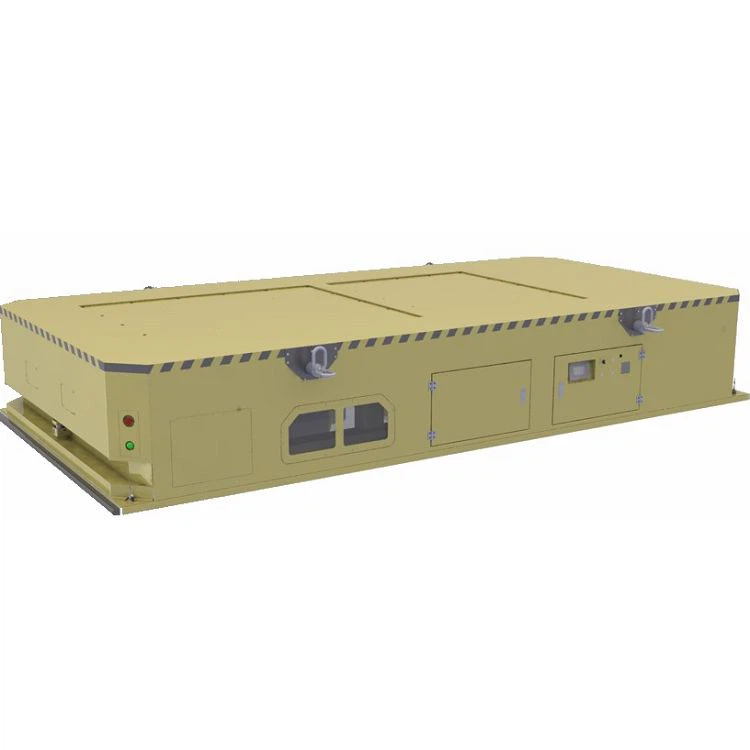
In the dynamic landscape of industrial automation, Omni Direction Automated Guided Vehicles (AGVs) have emerged as a revolutionary force, offering unparalleled flexibility and efficiency in material handling. As a leading supplier of Omni Direction AGVs, I often encounter inquiries about one crucial aspect: the battery life of these remarkable machines. In this blog post, I will delve into the factors influencing the battery life of Omni Direction AGVs, explore strategies to optimize it, and provide insights based on our extensive experience in the industry.

Understanding the Basics of Omni Direction AGVs
Before we dive into the battery life topic, let's briefly understand what Omni Direction AGVs are. These AGVs are equipped with advanced omnidirectional wheels or drive systems that allow them to move in any direction - forward, backward, sideways, and even rotate on the spot. This unique mobility feature makes them ideal for applications where precise maneuverability is required, such as in narrow aisles, flexible assembly lines, and complex material handling environments.
We offer a diverse range of Omni Direction AGVs, including Unmanned Conveyor AGVs, Omni-Directional Lift AGVs, and Magenetic Strip Navigation AGVs. Each type is designed to meet specific industry needs, from transporting heavy loads to performing delicate assembly tasks.

Factors Affecting the Battery Life of Omni Direction AGVs
The battery life of Omni Direction AGVs is influenced by several factors, which can be broadly categorized into three main areas: vehicle design, operational conditions, and battery technology.
Vehicle Design
- Payload Capacity: The amount of weight an AGV is required to carry directly impacts its energy consumption. Heavier payloads demand more power from the motor to move, resulting in a shorter battery life. Our Omni Direction AGVs are engineered to optimize payload capacity while minimizing energy consumption, ensuring efficient operation even under heavy loads.
- Drive System Efficiency: The efficiency of the AGV's drive system plays a crucial role in determining battery life. Our advanced omnidirectional drive systems are designed to minimize friction and energy losses, allowing the AGV to move smoothly and efficiently with less power consumption.
- Onboard Electronics: The AGV's onboard electronics, such as sensors, controllers, and communication devices, also consume energy. We use energy-efficient components and optimize the power management system to reduce the overall energy consumption of these electronics, thereby extending the battery life.
Operational Conditions
- Operating Environment: The temperature, humidity, and terrain of the operating environment can significantly affect the battery life. Extreme temperatures, both hot and cold, can reduce the battery's performance and lifespan. Our Omni Direction AGVs are designed to operate in a wide range of environmental conditions, but it is recommended to maintain a moderate temperature and humidity level for optimal battery performance.
- Travel Distance and Speed: The distance an AGV travels and its speed also impact the battery life. Longer travel distances and higher speeds require more energy, resulting in a shorter battery life. By optimizing the AGV's route planning and speed control, we can minimize energy consumption and extend the battery life.
- Duty Cycle: The duty cycle, which refers to the ratio of operating time to idle time, is another important factor. AGVs that operate continuously for long periods without sufficient charging breaks will experience a shorter battery life. We recommend implementing a proper charging schedule and using fast-charging technologies to ensure the AGV's battery is fully charged and ready for operation.
Battery Technology
- Battery Type: The type of battery used in the AGV has a significant impact on its battery life. We offer a variety of battery options, including lead-acid, lithium-ion, and nickel-metal hydride batteries. Each type has its own advantages and disadvantages in terms of energy density, charging time, and lifespan. Lithium-ion batteries, for example, offer higher energy density, longer lifespan, and faster charging times compared to lead-acid batteries, making them a popular choice for Omni Direction AGVs.
- Battery Capacity: The battery capacity, measured in ampere-hours (Ah), determines the amount of energy the battery can store. A higher battery capacity generally means a longer battery life. However, it is important to balance the battery capacity with the AGV's power requirements and weight to ensure optimal performance.
- Battery Management System (BMS): A BMS is an essential component of the battery system that monitors and controls the charging and discharging process. It helps to prevent overcharging, over-discharging, and overheating, which can damage the battery and reduce its lifespan. Our Omni Direction AGVs are equipped with advanced BMSs to ensure the safe and efficient operation of the battery.
Strategies to Optimize the Battery Life of Omni Direction AGVs
Based on our experience, we have developed several strategies to optimize the battery life of Omni Direction AGVs:
Vehicle Design Optimization
- Lightweight Design: We use lightweight materials in the construction of our AGVs to reduce the overall weight and energy consumption. This not only extends the battery life but also improves the AGV's maneuverability and performance.
- Energy Recovery Systems: Our AGVs are equipped with energy recovery systems that capture and store the energy generated during braking and deceleration. This energy can then be used to power the AGV, reducing the overall energy consumption and extending the battery life.
Operational Optimization
- Route Planning and Optimization: We use advanced software algorithms to optimize the AGV's route planning, taking into account factors such as travel distance, traffic congestion, and energy consumption. By minimizing the travel distance and avoiding unnecessary stops and starts, we can reduce the energy consumption and extend the battery life.
- Speed Control: We implement speed control strategies to ensure the AGV operates at an optimal speed, balancing the need for efficiency and energy conservation. By avoiding high-speed operation and sudden acceleration and deceleration, we can reduce the energy consumption and extend the battery life.
- Charging Management: We recommend implementing a proper charging management system to ensure the AGV's battery is fully charged and ready for operation. This includes using fast-charging technologies, scheduling regular charging breaks, and monitoring the battery's state of charge.
Battery Technology Optimization
- Battery Selection: We carefully select the battery type and capacity based on the AGV's power requirements and operational conditions. By choosing the right battery, we can ensure optimal performance and extend the battery life.
- Battery Maintenance: We provide comprehensive battery maintenance services to ensure the battery is properly maintained and serviced. This includes regular battery inspections, cleaning, and replacement of worn-out components.
Real-World Examples
To illustrate the effectiveness of our strategies, let's look at some real-world examples of our Omni Direction AGVs in operation.
- Case Study 1: A Manufacturing Facility In a manufacturing facility, our Omni Direction AGVs were used to transport heavy materials between different production lines. By implementing our route planning and optimization strategies, we were able to reduce the travel distance by 20% and the energy consumption by 15%. This resulted in a significant extension of the battery life, allowing the AGVs to operate for longer periods without recharging.
- Case Study 2: A Warehouse In a warehouse, our Omni Direction AGVs were used to perform order picking and inventory management tasks. By using our energy recovery systems and speed control strategies, we were able to reduce the energy consumption by 10% and the battery charging time by 20%. This not only extended the battery life but also improved the overall efficiency of the warehouse operations.
Conclusion
In conclusion, the battery life of Omni Direction AGVs is influenced by several factors, including vehicle design, operational conditions, and battery technology. By understanding these factors and implementing the strategies outlined in this blog post, we can optimize the battery life of our Omni Direction AGVs and ensure their efficient and reliable operation.
As a leading supplier of Omni Direction AGVs, we are committed to providing our customers with high-quality products and solutions that meet their specific needs. If you are interested in learning more about our Omni Direction AGVs or have any questions about battery life optimization, please feel free to contact us for a consultation. We look forward to working with you to enhance your material handling operations with our innovative AGV solutions.