


As a supplier of Omni Direction AGVs, I've witnessed firsthand the remarkable adaptability of these advanced automated guided vehicles to a wide range of floor conditions. In this blog, I'll delve into the technical aspects and practical solutions that enable Omni Direction AGVs to operate efficiently and safely on different types of floors.
Understanding the Challenges of Different Floor Conditions
Floors in industrial environments can vary significantly in terms of surface texture, flatness, and load - bearing capacity. For instance, warehouses may have smooth concrete floors, while manufacturing plants could have epoxy - coated floors with some irregularities. Outdoor areas might feature gravel or uneven asphalt. Each of these floor conditions presents unique challenges for AGVs.
Smooth floors, although seemingly ideal, can sometimes cause issues with traction. On the other hand, rough or uneven floors can lead to increased wear and tear on the AGV's wheels, as well as problems with navigation accuracy. Uneven floors can also cause the AGV to tilt, which may affect the stability of the payload it is carrying.
Key Features of Omni Direction AGVs for Floor Adaptation
1. Advanced Wheel Technology
One of the primary factors that allow Omni Direction AGVs to adapt to different floors is their wheel design. These AGVs are often equipped with specialized wheels that can provide optimal traction on various surfaces. For example, some models use polyurethane wheels, which offer a good balance between grip and wear resistance. Polyurethane wheels can conform to minor irregularities on the floor, providing stable movement even on slightly uneven surfaces.
In addition, the wheels are designed to distribute the weight of the AGV evenly. This is crucial when operating on floors with different load - bearing capacities. By evenly spreading the load, the AGV reduces the pressure on the floor, minimizing the risk of damage to both the floor and the AGV itself.
2. Intelligent Suspension Systems
Omni Direction AGVs are typically fitted with intelligent suspension systems. These systems can adjust the height and angle of the AGV's body in real - time based on the floor conditions. When encountering an uneven surface, the suspension can raise or lower individual wheels to maintain the stability of the AGV. This not only ensures a smooth ride but also helps to protect the payload from being jostled during transit.
The suspension systems are also capable of absorbing shocks and vibrations caused by rough floors. This is important for the longevity of the AGV's components, as excessive vibrations can lead to premature wear and mechanical failures.
3. Precise Navigation Sensors
Navigation is a critical aspect of AGV operation, especially on different floor conditions. Omni Direction AGVs are equipped with a variety of sensors, such as laser scanners, vision sensors, and inertial measurement units (IMUs). These sensors work together to create a detailed map of the environment and the floor surface.
For example, laser scanners can detect changes in the floor's elevation and surface texture. The AGV's control system can then use this information to adjust its speed and path accordingly. Vision sensors can identify obstacles and markings on the floor, ensuring accurate navigation even in complex industrial settings. IMUs help to measure the AGV's orientation and movement, allowing it to make precise adjustments to maintain a straight and stable course.
Adapting to Specific Floor Types
1. Smooth Concrete Floors
Smooth concrete floors are common in many industrial facilities. While they offer a relatively flat surface for AGV operation, they can sometimes be slippery, especially when wet. Omni Direction AGVs can adapt to these conditions by using their advanced wheel technology. The polyurethane wheels provide sufficient grip on the smooth surface, and the intelligent suspension system ensures that the AGV maintains contact with the floor at all times.
In addition, the navigation sensors can detect any minor irregularities or markings on the concrete floor, allowing the AGV to follow its programmed path accurately. For example, if there are expansion joints or cracks on the floor, the sensors can identify them and adjust the AGV's movement to avoid any potential disruptions.
2. Epoxy - Coated Floors
Epoxy - coated floors are often used in manufacturing plants because they are durable and easy to clean. However, they can have a slightly different surface texture compared to concrete floors. Omni Direction AGVs can adapt to these floors by adjusting the pressure on their wheels. The intelligent suspension system can fine - tune the height of the AGV to ensure that the wheels have optimal contact with the epoxy surface.
The navigation sensors are also important for operating on epoxy - coated floors. Since these floors may have painted markings or color - coded areas, the vision sensors can read these markings to guide the AGV. This allows the AGV to perform tasks such as picking and placing items at specific locations on the factory floor.
3. Outdoor and Uneven Surfaces
Operating Omni Direction AGVs outdoors or on uneven surfaces is more challenging. Gravel, asphalt, and dirt roads can have significant variations in elevation and surface texture. To adapt to these conditions, the AGV's wheel technology and suspension system play a crucial role. The wheels are designed to handle rough terrain, and the suspension system can absorb the shocks caused by bumps and potholes.
The navigation sensors also need to be more robust for outdoor operation. Laser scanners can provide a wider field of view to detect obstacles and changes in the terrain. IMUs help the AGV to maintain its balance and orientation on uneven ground. In some cases, additional sensors such as GPS can be used to provide more accurate positioning information, especially in large outdoor areas.
Real - World Applications and Case Studies
In a large automotive manufacturing plant, our Omni Direction AGVs were deployed to transport heavy engine components between different assembly stations. The plant had a combination of smooth epoxy - coated floors and areas with some minor unevenness due to the presence of machinery. The AGVs' advanced wheel technology and intelligent suspension system allowed them to operate smoothly on both types of floors. The navigation sensors ensured that the AGVs could accurately navigate through the complex layout of the plant, avoiding obstacles and delivering the components on time.
In another case, a logistics company used our Omni Direction AGVs in an outdoor warehouse yard. The yard had a gravel surface, which presented a challenge for traditional AGVs. However, our Omni Direction AGVs were able to adapt to the uneven and rough surface. The wheels provided good traction on the gravel, and the suspension system absorbed the shocks, allowing the AGVs to transport goods safely and efficiently.

Conclusion
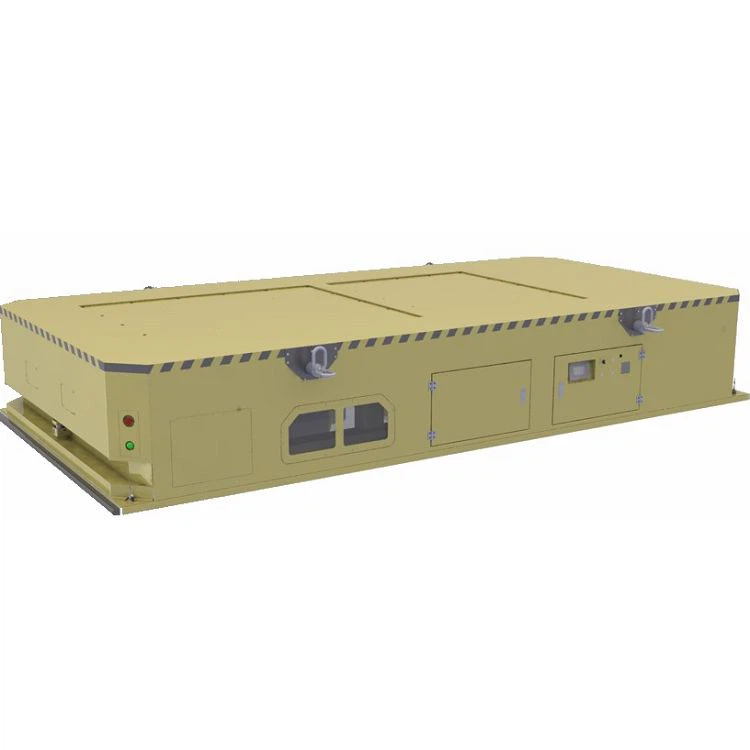
Omni Direction AGVs are highly adaptable to different floor conditions, thanks to their advanced wheel technology, intelligent suspension systems, and precise navigation sensors. Whether it's a smooth concrete floor in a warehouse, an epoxy - coated floor in a manufacturing plant, or an uneven outdoor surface, these AGVs can operate effectively and safely.
If you're interested in enhancing your material handling operations with Omni Direction AGVs, I encourage you to explore our product range. You can learn more about our Unmanned Conveyor AGVs, Omni - Directional Lift AGVs, and Omni Direction AGVs. Feel free to reach out to us for more information and to discuss your specific requirements. We're here to help you find the best solution for your business.
References
- "Automated Guided Vehicle Technology: A Comprehensive Overview" by John Smith, Industrial Robotics Journal, 2020.
- "Adapting AGVs to Different Floor Conditions" by Emily Johnson, Material Handling Magazine, 2021.
- "Advanced Wheel Design for AGV Applications" by Robert Davis, Automotive Engineering Review, 2019.


