

I'm from a supplier of Outdoor Unmanned AGVs, and today I wanna talk about one of the most important features of these machines: the minimum turning radius.
Let's start with the basics. An AGV, or Automated Guided Vehicle, is a self - driving vehicle that can move around without a human operator. Outdoor Unmanned AGVs are specifically designed to work in outdoor environments, like large industrial yards, ports, and wind farms.
So, what exactly is the minimum turning radius? Well, it's the smallest circle that an AGV can turn within. Think of it like when you're driving a car. If you have to make a really tight U - turn, the space you need to complete that turn is related to the car's turning radius. For AGVs, this is crucial because it determines how well they can maneuver in confined spaces.
Why the Minimum Turning Radius Matters
In outdoor settings, space isn't always unlimited. You might have to navigate around obstacles, work in narrow corridors, or park in tight spots. A smaller minimum turning radius means the AGV can be more flexible and efficient.
For example, in a Factory Area Transfer scenario, there could be lots of machinery and other vehicles moving around. An AGV with a small turning radius can easily dodge these obstacles and make quick turns to reach its destination. This saves time and reduces the risk of collisions.
In a wind farm, Wind Power And Power Generation AGVs need to move around the large turbines. The area around these turbines can be quite congested, and a small turning radius allows the AGV to get in and out of these areas smoothly, transporting parts and equipment as needed.
Factors Affecting the Minimum Turning Radius
Several things can influence the minimum turning radius of an Outdoor Unmanned AGV.
Vehicle Design
The physical structure of the AGV plays a huge role. AGVs come in different shapes and sizes. Some have a more compact design, which generally allows for a smaller turning radius. For instance, a four - wheel AGV might have a different turning characteristic compared to a six - wheel one. The arrangement of the wheels, such as whether they are in a tandem or independent configuration, also matters.
Steering System
There are different types of steering systems for AGVs, like differential steering, Ackermann steering, and omni - directional steering. Differential steering is common in some smaller AGVs. It works by varying the speed of the wheels on either side of the vehicle to turn. This can result in a relatively small turning radius, sometimes even allowing the AGV to turn in place.
Ackermann steering, on the other hand, is similar to what you see in regular cars. It's designed to make the wheels turn at different angles to ensure smooth cornering. While it's great for straight - line stability, it might have a larger turning radius compared to differential steering in some cases.
Omni - directional steering is the most flexible. AGVs with this system can move in any direction, including sideways and diagonally. They can achieve very small turning radii and are extremely maneuverable, but they are often more complex and expensive.
Load and Payload
The weight and size of the load the AGV is carrying can also impact its turning radius. A heavily loaded AGV might have a harder time making tight turns. The additional weight can put more stress on the wheels and the steering system, causing the AGV to need more space to turn safely.
Typical Minimum Turning Radius Values
The minimum turning radius of Outdoor Unmanned AGVs can vary widely depending on the factors mentioned above.
For smaller, lightweight AGVs used in relatively open outdoor areas, the minimum turning radius could be as small as 1 - 2 meters. These are often the ones with differential or omni - directional steering and a compact design.
Medium - sized AGVs, which are more common in industrial settings for tasks like Factory Area Transfer, might have a turning radius in the range of 2 - 5 meters.
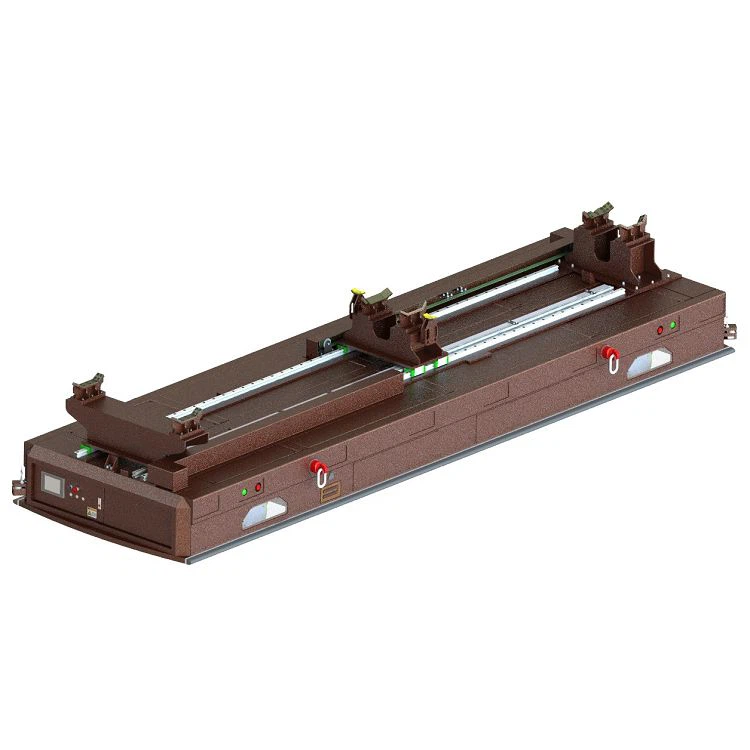

Larger, heavy - duty AGVs, such as those used for transporting large equipment in wind farms or ports, could have a minimum turning radius of 5 meters or more. These AGVs are built to handle big loads, and their size and weight naturally require more space to turn.
How to Choose the Right AGV Based on Turning Radius
When you're in the market for an Outdoor Unmanned AGV, the minimum turning radius should be one of the key factors you consider.
First, assess your working environment. If your site has lots of narrow passages, sharp corners, or limited space, you'll definitely want an AGV with a small turning radius. Look for AGVs with differential or omni - directional steering if you need maximum flexibility.
Second, think about the types of loads you'll be transporting. If you're dealing with heavy or bulky items, make sure the AGV can handle the load while still being able to turn safely. You might need to balance the size of the turning radius with the load - carrying capacity.
Finally, consider your budget. AGVs with more advanced steering systems and smaller turning radii can be more expensive. You need to find a balance between the features you need and what you can afford.
Our Offerings
As a supplier of Outdoor Unmanned AGVs, we have a wide range of models to meet different needs. Our Outdoor Heavy Duty Navigation AGV is a great choice for those who need to transport heavy loads in outdoor environments. It's designed with a steering system that allows for relatively tight turns, even when fully loaded.
We also have smaller, more agile AGVs that are perfect for factory area transfers. These AGVs have a small minimum turning radius, which makes them ideal for navigating through congested factory floors.
If you're involved in wind power and power generation, our specialized AGVs are built to handle the unique challenges of wind farms. They can move around turbines with ease, thanks to their optimized turning characteristics.
Wrapping Up
The minimum turning radius of Outdoor Unmanned AGVs is a crucial factor that can greatly impact their performance and efficiency. By understanding what it is, what affects it, and how to choose the right AGV based on it, you can make a more informed decision for your business.
If you're interested in learning more about our Outdoor Unmanned AGVs or have specific requirements regarding the minimum turning radius, don't hesitate to get in touch. We're here to help you find the perfect solution for your needs. Let's talk about how we can make your outdoor operations more efficient with our top - notch AGVs!
References
- "Automated Guided Vehicles: Technology, Implementation, and Management" by John T. Black
- Industry reports on Outdoor Unmanned AGV technology and applications


