

What is the maximum gradient that Outdoor Heavy Load GPS AGVs can climb?
As a supplier of Outdoor Heavy Load GPS AGVs, I often encounter inquiries from customers regarding the maximum gradient these advanced vehicles can climb. This is a crucial aspect, especially for industries that operate in challenging outdoor terrains. Understanding the climbing capabilities of our Outdoor Heavy Load GPS AGVs is essential for customers to make informed decisions about their material handling and transportation needs.
Factors Affecting the Climbing Gradient
The maximum gradient an Outdoor Heavy Load GPS AGV can climb is influenced by several key factors. Firstly, the power of the AGV's drive system plays a significant role. Our Outdoor Heavy Load GPS AGVs are equipped with high - powered electric motors or combustion engines, depending on the specific model. These powerful drive systems provide the necessary torque to ascend slopes. For instance, our Outdoor Heavy Duty Navigation AGV is designed with a state - of - the - art electric drive system that offers excellent power output, enabling it to handle relatively steep gradients.
Secondly, the weight distribution of the AGV and its load is crucial. Proper weight distribution ensures that the wheels maintain sufficient traction on the slope. If the weight is not evenly distributed, there is a risk of the AGV losing traction, especially on steeper gradients. Our engineers have carefully designed the chassis and load - bearing structures of our AGVs to optimize weight distribution. For example, the 40ft 20ft Container Trans Flat Car has a well - balanced design that allows it to carry heavy containers while maintaining good traction on slopes.
The type of tires used on the AGV also impacts its climbing ability. Tires with a deep tread pattern and good grip are essential for climbing gradients. Our Outdoor Heavy Load GPS AGVs are typically fitted with heavy - duty tires that are specifically designed for outdoor use. These tires provide enhanced traction on various surfaces, including gravel, dirt, and asphalt.
Another important factor is the control system of the AGV. Our AGVs are equipped with advanced GPS - based navigation and control systems. These systems can adjust the speed and power output of the AGV in real - time based on the slope angle and other environmental factors. For example, when the AGV detects an incline, the control system can increase the power to the drive wheels to maintain a steady climb.
Typical Climbing Gradients of Our Outdoor Heavy Load GPS AGVs
Based on our experience and product testing, our Outdoor Heavy Load GPS AGVs can generally climb gradients ranging from 5% to 15%. However, this range can vary depending on the specific model and the operating conditions.
For lighter - duty models, such as those used for transporting smaller loads in less demanding outdoor environments, the maximum climbing gradient may be around 5% - 8%. These AGVs are often used in warehouses with small outdoor ramps or in light industrial areas.
On the other hand, our heavy - duty models, like the ones designed for transporting large containers or heavy equipment, can typically handle gradients of up to 15%. For example, the Wind Power And Power Generation AGVs are built to operate in the challenging terrains of wind farms and power generation plants. These AGVs need to navigate through uneven and sloped surfaces, and their design allows them to climb steeper gradients to reach the required locations.
Case Studies
Let's take a look at some real - world examples to better understand the climbing capabilities of our Outdoor Heavy Load GPS AGVs.
In a large container terminal, our 40ft 20ft Container Trans Flat Car was used to transport containers between different storage areas. The terminal had a few ramps with gradients of up to 10%. The AGV was able to smoothly navigate these ramps, thanks to its powerful drive system and well - designed weight distribution. The GPS - based control system adjusted the speed and power output of the AGV in real - time, ensuring a safe and efficient climb.

In a wind farm, our Wind Power And Power Generation AGVs were deployed to transport large wind turbine components. The terrain in the wind farm was hilly, with gradients reaching up to 12%. The AGVs, equipped with heavy - duty tires and advanced control systems, were able to successfully climb these slopes, delivering the components to the installation sites on time.
Considerations for Customers
When customers are considering purchasing an Outdoor Heavy Load GPS AGV, they should carefully evaluate the climbing requirements of their specific application. They need to consider the maximum gradient of the slopes in their operating environment, as well as the weight and type of the loads they will be transporting.
It is also important for customers to understand that the climbing performance of an AGV can be affected by factors such as the surface condition of the slope. For example, a wet or icy slope will reduce the traction of the AGV's tires, making it more difficult to climb. In such cases, additional safety measures may need to be taken, such as using anti - slip devices or reducing the load on the AGV.
Conclusion
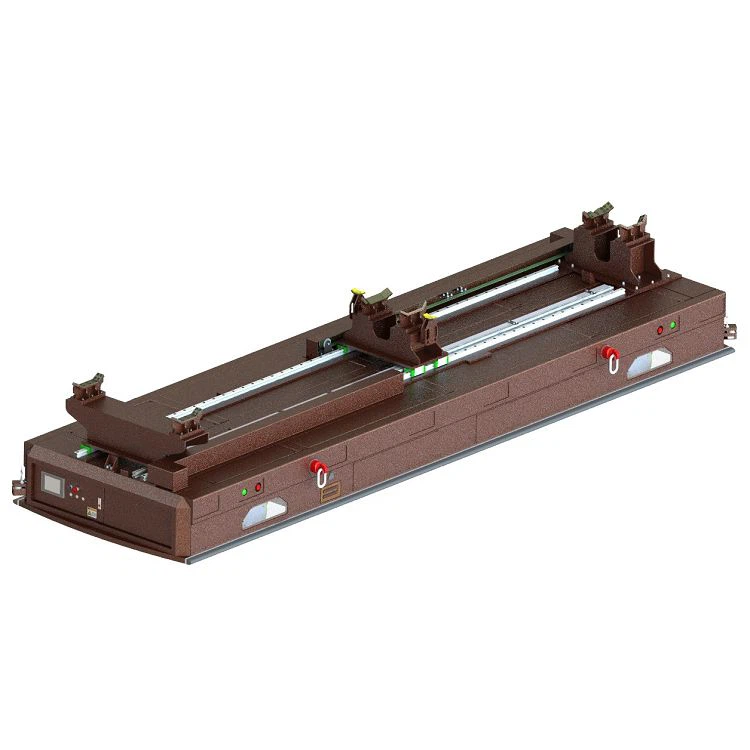
In conclusion, the maximum gradient that Outdoor Heavy Load GPS AGVs can climb depends on multiple factors, including the drive system, weight distribution, tire type, and control system. Our range of Outdoor Heavy Load GPS AGVs, including the Outdoor Heavy Duty Navigation AGV, 40ft 20ft Container Trans Flat Car, and Wind Power And Power Generation AGVs, are designed to handle a variety of gradients, from 5% to 15%.
If you are in the market for an Outdoor Heavy Load GPS AGV and have specific climbing requirements, we invite you to contact us for a detailed consultation. Our team of experts can help you select the most suitable AGV model for your application and provide you with all the necessary information and support. Whether you are operating in a container terminal, a wind farm, or any other outdoor industrial environment, our AGVs can offer reliable and efficient transportation solutions.
References
- Engineering manuals of Outdoor Heavy Load GPS AGV models
- Industry research reports on AGV performance in outdoor environments
- Case study data from real - world AGV deployments


