


As a supplier of Port Transport AGVs, I've witnessed firsthand the remarkable advancements in this technology and the pivotal role it plays in modern port operations. One of the most frequently asked questions we encounter is about the accuracy of the positioning systems in these AGVs. In this blog, I'll delve into the intricacies of these positioning systems, their accuracy levels, and the factors that influence them.
Understanding Port Transport AGVs
Port Transport AGVs are automated vehicles designed to transport containers and other cargo within ports. These vehicles operate in dynamic and challenging environments, where precision and reliability are of utmost importance. The positioning system is the heart of these AGVs, enabling them to navigate accurately, avoid obstacles, and interact with other equipment in the port.
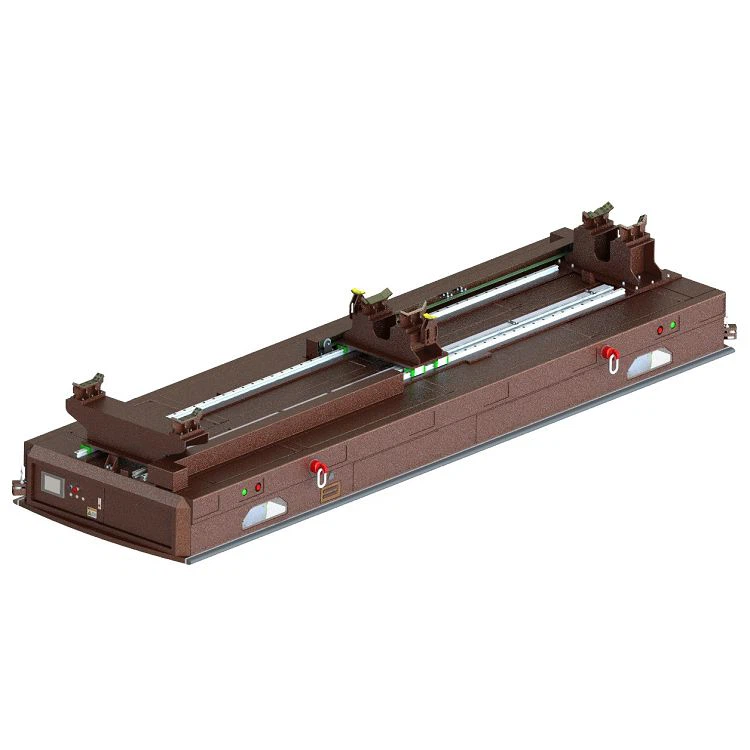
Port Transport AGVs are part of a broader range of outdoor unmanned AGVs. For more information about these AGVs, you can visit our website Port Transport AGVs. We also offer other types of AGVs, such as Wind Power And Power Generation AGVs and Outdoor Heavy Duty Navigation AGV.
Types of Positioning Systems in Port Transport AGVs
There are several types of positioning systems used in Port Transport AGVs, each with its own advantages and limitations. The most common types include:
GPS - Global Positioning System
GPS is a widely used positioning technology that provides global coverage. It uses a network of satellites to determine the position of the AGV. GPS is relatively inexpensive and easy to implement, but its accuracy can be affected by factors such as signal interference, atmospheric conditions, and the presence of tall buildings or other obstacles in the port.
Laser Navigation
Laser navigation systems use lasers to measure the distance between the AGV and surrounding objects. These systems are highly accurate and can provide real - time feedback on the AGV's position. Laser navigation is less affected by environmental factors compared to GPS, but it requires a stable and well - defined environment. In ports, the presence of moving objects and changing weather conditions can pose challenges to laser navigation systems.
Inertial Navigation
Inertial navigation systems use accelerometers and gyroscopes to measure the AGV's acceleration and rotation. These systems can provide continuous position information, even when other positioning systems are unavailable. However, inertial navigation systems are prone to drift over time, which means that their accuracy decreases as the AGV moves for an extended period.
Visual Navigation
Visual navigation systems use cameras to capture images of the surrounding environment. These images are then analyzed to determine the AGV's position. Visual navigation can be highly accurate, especially in well - structured environments. However, it can be affected by lighting conditions, the presence of dust or fog, and the complexity of the visual scene.
Accuracy of Positioning Systems
The accuracy of the positioning system in a Port Transport AGV depends on several factors, including the type of system used, the environment in which the AGV operates, and the quality of the sensors and algorithms.
- GPS: In ideal conditions, GPS can provide an accuracy of a few meters. However, in a port environment, where there are many tall buildings and other obstacles, the accuracy can degrade to several tens of meters. Differential GPS (DGPS), which uses a fixed reference station to correct for errors, can improve the accuracy to within a few centimeters.
- Laser Navigation: Laser navigation systems can typically achieve an accuracy of a few millimeters to a few centimeters. This high level of accuracy makes them suitable for applications where precise positioning is required, such as container stacking.
- Inertial Navigation: The accuracy of inertial navigation systems depends on the quality of the sensors and the integration time. In general, the error in position can increase by a few centimeters per minute of operation.
- Visual Navigation: Visual navigation systems can achieve an accuracy of a few centimeters, depending on the quality of the cameras and the complexity of the environment. In some cases, with advanced algorithms and high - resolution cameras, the accuracy can be improved to a few millimeters.
Factors Affecting Positioning Accuracy
Several factors can affect the accuracy of the positioning systems in Port Transport AGVs:
Environmental Factors
- Weather Conditions: Rain, fog, and strong winds can affect the performance of GPS, laser, and visual navigation systems. For example, rain can scatter laser beams, reducing the accuracy of laser navigation.
- Obstacles: The presence of tall buildings, containers, and other obstacles in the port can block GPS signals and interfere with laser and visual navigation systems.
- Surface Conditions: Uneven or slippery surfaces can affect the movement of the AGV and the accuracy of the inertial navigation system.
Sensor Quality and Calibration
The accuracy of the positioning system also depends on the quality of the sensors used. High - quality sensors are more accurate and reliable. Regular calibration of the sensors is also essential to maintain their accuracy.
Algorithm Design
The algorithms used to process the sensor data play a crucial role in determining the accuracy of the positioning system. Advanced algorithms can filter out noise, correct for errors, and improve the overall performance of the system.
Improving Positioning Accuracy
To improve the positioning accuracy of Port Transport AGVs, several strategies can be employed:
- Multi - Sensor Fusion: Combining multiple positioning systems, such as GPS, laser navigation, and inertial navigation, can improve the accuracy and reliability of the positioning. By fusing the data from different sensors, the strengths of each system can be utilized, while the weaknesses can be compensated for.
- Environmental Adaptation: Developing algorithms that can adapt to changing environmental conditions can improve the performance of the positioning system. For example, algorithms can be designed to adjust the parameters of the laser navigation system based on the weather conditions.
- Regular Maintenance and Calibration: Regular maintenance and calibration of the sensors and the AGV itself are essential to ensure the accuracy of the positioning system. This includes checking the alignment of the sensors, replacing worn - out components, and updating the software.
Importance of Positioning Accuracy in Port Operations
Accurate positioning is crucial for the efficient and safe operation of Port Transport AGVs. In port operations, AGVs are used to transport containers between different locations, such as the quay, the yard, and the warehouse. Precise positioning is required to ensure that the containers are loaded and unloaded correctly, and that the AGVs can navigate safely through the port.
In addition, accurate positioning can improve the productivity of the port. By reducing the time required for container handling and improving the utilization of the port space, AGVs can increase the throughput of the port.
Conclusion
The accuracy of the positioning systems in Port Transport AGVs varies depending on the type of system used, the environment, and other factors. While GPS provides global coverage but may have limited accuracy in port environments, laser navigation, inertial navigation, and visual navigation systems can offer higher levels of accuracy. By using multi - sensor fusion, environmental adaptation, and regular maintenance, the accuracy of the positioning systems can be improved.
As a supplier of Port Transport AGVs, we are committed to providing our customers with high - quality AGVs with accurate positioning systems. If you are interested in our products or have any questions about the positioning accuracy of our AGVs, please feel free to contact us for further discussion and potential procurement opportunities.
References
- "Autonomous Guided Vehicle Technology and Applications" by Peter I. Corke.
- "Navigation and Control of Unmanned Vehicles" by John R. Yates.
- Research papers on port automation and AGV technology from academic journals such as the Journal of Intelligent Transportation Systems.


