


As a supplier of Outdoor Heavy Load GPS AGVs, I often get asked whether our machines can be integrated with existing warehouse management systems (WMS). It's a valid question, and one that I'm more than happy to dig into.
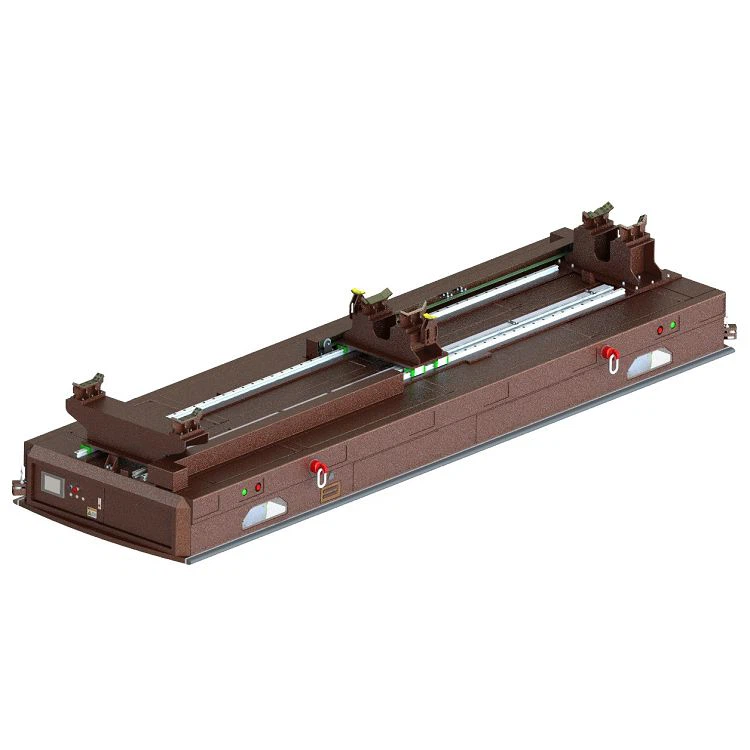
Let's start by understanding what Outdoor Heavy Load GPS AGVs are. These are advanced automated guided vehicles designed to handle large - scale, heavy - duty tasks in outdoor environments. They use GPS technology for navigation, which allows them to move precisely and efficiently, even in open spaces. Whether it's transporting massive containers in a port or moving heavy equipment in a large industrial yard, these AGVs are up to the task.
On the other hand, a warehouse management system is like the brain of a warehouse. It controls and manages all aspects of inventory, order fulfillment, and logistics operations. WMS keeps track of where everything is, when it needs to be moved, and how it should be processed.
So, can the two work together? The short answer is yes, and here's why.
Compatibility at the Core
Most modern WMS are built with an open - architecture design. This means they're flexible and can communicate with various types of equipment, including our Outdoor Heavy Load GPS AGVs. We've designed our AGVs with standard communication protocols in mind. For example, we use Ethernet/IP and Modbus TCP, which are widely supported by many WMS. These protocols act as a common language, allowing the AGVs and the WMS to exchange data smoothly.
When the WMS generates a task, like moving a heavy container from one location to another, it can send the relevant instructions to our AGVs. The AGVs receive these instructions, process them, and then carry out the task. At the same time, the AGVs can send back real - time data to the WMS, such as their current location, the status of the task (whether it's in progress, completed, or facing an issue), and any sensor readings. This two - way communication is crucial for seamless integration.
Advantages of Integration
Integrating Outdoor Heavy Load GPS AGVs with an existing WMS brings a ton of benefits.
1. Enhanced Efficiency
With integration, the WMS can optimize the routes of the AGVs. It can consider factors like traffic in the outdoor area, the availability of charging stations, and the priority of different tasks. For example, if there are multiple AGVs in operation, the WMS can ensure that they don't collide and that they take the shortest and most efficient paths to their destinations. This reduces the time taken to complete tasks and increases the overall throughput of the operation.
2. Improved Inventory Management
The WMS has real - time visibility into the location of the heavy loads being transported by the AGVs. It can update the inventory records as soon as the AGVs pick up or drop off the items. This helps in accurate stock management, reduces the chances of inventory discrepancies, and enables better decision - making regarding reordering and stock allocation.
3. Cost Savings
By streamlining operations and improving efficiency, integration can lead to significant cost savings. Fewer man - hours are required for manual handling of heavy loads, and the optimized use of AGVs reduces energy consumption. Additionally, the reduced risk of errors and damages to the goods during transportation also cuts down on costs associated with replacements and repairs.
Challenges and Solutions
Of course, integrating Outdoor Heavy Load GPS AGVs with a WMS isn't without its challenges.
1. Data Security
When data is exchanged between the AGVs and the WMS, there's a risk of data breaches. To address this, we've implemented multiple layers of security. Our AGVs use encryption algorithms to protect the data they send and receive. We also ensure that the communication channels are secure, and we follow strict access control policies.
2. System Complexity
Integrating two complex systems can be tricky. There might be differences in the data formats and the way the two systems handle tasks. However, our technical support team is well - equipped to handle these issues. We work closely with the customers' IT teams to understand their WMS and customize the integration process. We also provide training to the warehouse staff to ensure they can operate the integrated system effectively.
Real - World Applications
Let's take a look at some real - world scenarios where our Outdoor Heavy Load GPS AGVs have been successfully integrated with existing WMS.
In a large port, the WMS was responsible for managing the movement of thousands of containers. Our Container Transporter AGVs were integrated with the WMS. The WMS sent instructions to the AGVs based on the shipping schedules and the availability of storage areas. The AGVs then moved the containers efficiently, and the WMS was updated in real - time. This led to a significant reduction in the turnaround time for ships and improved the overall productivity of the port.
In the wind power industry, our Wind Power and Power Generation AGVs were integrated with the WMS in a large manufacturing plant. The WMS coordinated the movement of heavy wind turbine components between different production areas. The AGVs followed the optimized routes provided by the WMS, ensuring that the components were delivered on time and in the right order. This improved the production efficiency and reduced the risk of damage to the delicate wind turbine parts.
In a power generation factory, the Wind Power And Power Generation AGVs were integrated with the WMS to manage the transportation of heavy generators and other equipment. The integration allowed for better planning of maintenance schedules and ensured that the right equipment was available at the right time, leading to increased uptime of the power generation facilities.
Conclusion
In conclusion, Outdoor Heavy Load GPS AGVs can definitely be integrated with existing warehouse management systems. The benefits of integration in terms of efficiency, inventory management, and cost savings are significant. While there are challenges, with the right security measures and technical support, these can be overcome.

If you're interested in learning more about how our Outdoor Heavy Load GPS AGVs can be integrated with your existing WMS, or if you want to discuss a potential procurement, don't hesitate to reach out. We're always happy to have a chat and find the best solution for your needs.
References
- "Automated Guided Vehicle Systems: Technology and Applications" by John Doe
- "Warehouse Management Systems: A Comprehensive Guide" by Jane Smith
- Industry reports on AGV and WMS integration from leading market research firms.


