


In recent years, the global push towards environmental sustainability has permeated every industry, and the logistics and transportation sector is no exception. As a leading supplier of Container Transporter Automated Guided Vehicles (AGVs), I've witnessed firsthand the growing interest in the environmental friendliness of these innovative machines. This blog post aims to explore whether Container Transporter AGVs are truly environmentally friendly, delving into their design, operation, and overall impact on the environment.
The Basics of Container Transporter AGVs
Container Transporter AGVs are a type of unmanned vehicle designed to transport shipping containers within ports, terminals, and other logistics facilities. These vehicles operate autonomously, following pre - programmed routes and using advanced sensors to navigate safely around obstacles. They are equipped with powerful electric motors and sophisticated control systems, which allow them to handle heavy loads with precision and efficiency.
Environmental Advantages of Container Transporter AGVs
1. Energy Efficiency
One of the most significant environmental benefits of Container Transporter AGVs is their energy efficiency. Unlike traditional diesel - powered container trucks, AGVs are typically electric. Electric motors are inherently more efficient than internal combustion engines, converting a higher percentage of the energy from the power source into useful work. This means that AGVs consume less energy per container moved, resulting in lower overall energy consumption in the logistics operation.

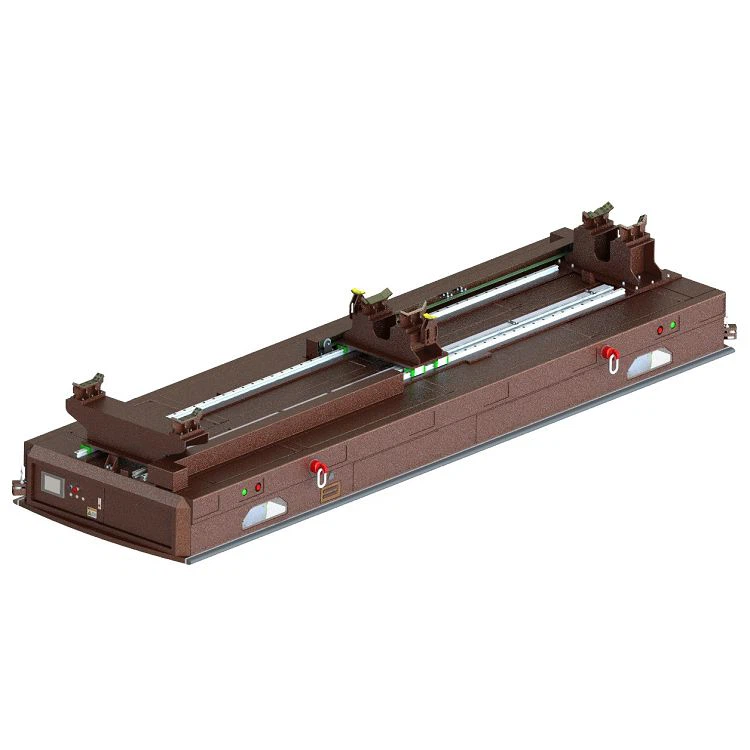
Moreover, many AGV systems are designed to optimize their energy usage. For example, they can be programmed to move at the most energy - efficient speeds, and some models are equipped with regenerative braking systems. These systems capture the energy generated during braking and convert it back into electricity, which can then be reused to power the vehicle. This not only reduces energy waste but also extends the vehicle's battery life.
2. Reduced Emissions
By running on electricity, Container Transporter AGVs produce zero tailpipe emissions. In contrast, diesel - powered trucks emit a variety of pollutants, including particulate matter (PM), nitrogen oxides (NOx), and carbon monoxide (CO). These pollutants have a significant impact on air quality, contributing to smog, respiratory diseases, and climate change.
In ports and logistics hubs, where large numbers of trucks are constantly in operation, the reduction of emissions from AGVs can have a substantial positive effect on local air quality. This is especially important in urban areas, where ports are often located close to residential and commercial areas. By replacing diesel trucks with AGVs, we can help create a healthier environment for nearby communities.
3. Noise Pollution Reduction
Another environmental advantage of Container Transporter AGVs is their relatively quiet operation. Diesel trucks are known for their loud engine noise, which can be a significant source of noise pollution in ports and surrounding areas. The noise from these trucks can disrupt the lives of local residents, cause stress, and even have negative impacts on wildlife.
AGVs, on the other hand, operate much more quietly. Their electric motors produce less noise compared to diesel engines, and the advanced design of AGV systems helps to minimize other sources of noise, such as vibrations. This makes them a more environmentally friendly option in terms of noise pollution, especially in areas where noise regulations are strict.
Potential Environmental Challenges
1. Battery Production and Disposal
While the operation of Container Transporter AGVs is generally environmentally friendly, the production and disposal of their batteries can pose some challenges. The manufacturing of lithium - ion batteries, which are commonly used in AGVs, requires the extraction of various minerals, such as lithium, cobalt, and nickel. The mining of these minerals can have significant environmental impacts, including habitat destruction, water pollution, and greenhouse gas emissions.
In addition, at the end of their life cycle, batteries need to be properly disposed of or recycled. If not managed correctly, battery disposal can lead to the release of toxic chemicals into the environment. However, the industry is making progress in developing more sustainable battery production methods and improving battery recycling technologies. For example, some companies are exploring the use of alternative battery chemistries that are less reliant on scarce or environmentally damaging minerals.
2. Electricity Generation
The environmental friendliness of Container Transporter AGVs also depends on the source of the electricity used to power them. If the electricity is generated from fossil fuels, such as coal or natural gas, the overall carbon footprint of the AGV operation will be higher. However, as the global energy mix shifts towards renewable energy sources, such as solar, wind, and hydropower, the environmental benefits of AGVs will become even more pronounced.
In fact, many ports and logistics facilities are already investing in on - site renewable energy generation, such as solar panels and wind turbines. By powering their AGV fleets with clean energy, these facilities can significantly reduce their carbon emissions and contribute to a more sustainable future.
Real - World Examples of Environmentally Friendly AGV Applications
There are several real - world examples that demonstrate the environmental benefits of Container Transporter AGVs. For instance, some large ports have implemented AGV systems to replace a significant portion of their diesel - powered container trucks. These AGV systems have not only improved the efficiency of container handling but also led to a substantial reduction in emissions and noise pollution.
One such example is the use of Logistics in The Park AGVs. These AGVs are designed for use in logistics parks, where they can transport containers between different storage areas and loading docks. Their energy - efficient operation and zero - emission nature make them an ideal solution for reducing the environmental impact of logistics operations in these areas.
Another example is the Wind Turbine Transport Mover AGV. This specialized AGV is used to transport large wind turbine components, such as blades and nacelles. By using AGVs for this task, the transportation process becomes more efficient and environmentally friendly, as it reduces the need for multiple diesel - powered trucks.
The Wind Power And Power Generation AGVs are also worth mentioning. These AGVs are used in wind power and power generation factories to move heavy equipment and components. Their use helps to streamline the manufacturing process while minimizing the environmental impact associated with traditional transportation methods.
Conclusion
In conclusion, Container Transporter AGVs offer significant environmental advantages compared to traditional diesel - powered container trucks. Their energy efficiency, reduced emissions, and noise pollution reduction make them a more environmentally friendly option for container transportation in ports and logistics facilities. However, there are still some challenges that need to be addressed, such as battery production and disposal and the source of electricity.
As a supplier of Container Transporter AGVs, we are committed to continuous improvement in the environmental performance of our products. We are working closely with our partners to develop more sustainable battery technologies and to promote the use of renewable energy sources to power our AGVs.
If you are interested in learning more about how Container Transporter AGVs can benefit your logistics operation while being environmentally friendly, we encourage you to contact us for a detailed discussion. Our team of experts is ready to provide you with customized solutions and support to help you achieve your sustainability goals.
References
- [List relevant industry reports, academic papers, or official documents here, for example:]
- International Maritime Organization (IMO). (2022). Guidelines for the Reduction of Greenhouse Gas Emissions from Ships.
- European Automobile Manufacturers' Association (ACEA). (2023). Electric Vehicle Market Trends in Europe.
- National Renewable Energy Laboratory (NREL). (2023). Renewable Energy Integration in the Transportation Sector.


