

In the dynamic landscape of modern industrial automation, Automated Guided Vehicles (AGVs) play a pivotal role in streamlining operations and enhancing efficiency. Among the various types of AGVs available, Backpack Lifting AGVs have emerged as a practical and efficient solution for a wide range of material handling tasks. As a leading supplier of Backpack Lifting AGVs, I often encounter questions from potential customers about the programming complexity of these innovative machines. In this blog, we'll delve into the topic to explore whether Backpack Lifting AGVs are easy to program.
Understanding Backpack Lifting AGVs
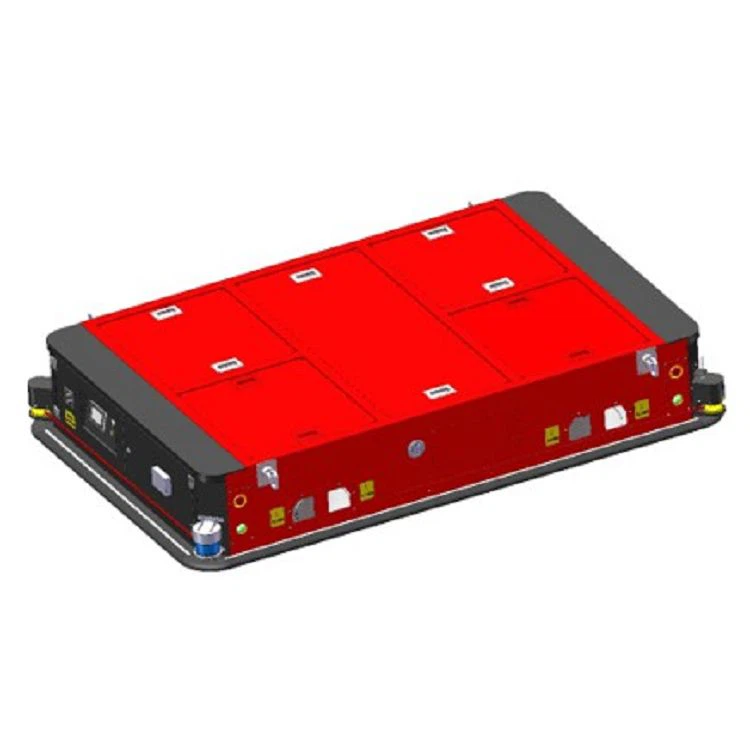
Before we dive into the programming aspect, let's first understand what Backpack Lifting AGVs are and how they function. These AGVs are designed to lift and transport loads by "backpacking" them, meaning they can pick up and carry loads on their upper surface. They are highly versatile and can be used in various industries, including warehouses, manufacturing plants, and distribution centers, to move goods from one location to another with minimal human intervention.
Backpack Lifting AGVs are equipped with advanced sensors, navigation systems, and control units that enable them to operate autonomously. They can navigate through a predefined path, avoid obstacles, and interact with other equipment in the production environment. The key to their successful operation lies in their programming, which dictates their movement patterns, task handling capabilities, and response to different scenarios.
Programming Complexity: A Multifaceted View
The question of whether Backpack Lifting AGVs are easy to program doesn't have a one - size - fits - all answer. It depends on several factors, including the programming interface, the complexity of the tasks, and the user's experience level.
Programming Interface
Most modern Backpack Lifting AGVs come with user - friendly programming interfaces. These interfaces are designed to simplify the programming process, even for users with limited technical knowledge. They often feature graphical user interfaces (GUIs) that allow users to create, edit, and manage AGV programs through intuitive drag - and - drop operations. For example, you can define the AGV's path by drawing it on a digital map of the facility, set waypoints, and specify actions such as load pick - up and drop - off points.
Some AGV manufacturers also offer programming interfaces that support scripting languages. While scripting may seem more complex at first glance, it provides greater flexibility for advanced users who need to create custom - tailored programs for specific applications. For instance, if you need the AGV to perform a series of complex maneuvers or interact with other equipment in a precise way, scripting can be a powerful tool.
Task Complexity
The complexity of the tasks assigned to the Backpack Lifting AGV is another crucial factor. Simple tasks, such as transporting loads from one fixed point to another in a straight line, are relatively easy to program. With a basic understanding of the programming interface, users can quickly set up the AGV to perform these straightforward tasks.
However, as the tasks become more complex, so does the programming. For example, if the AGV needs to navigate through a maze - like environment, make multiple stops, and interact with different types of equipment along the way, the programming process will require more time and expertise. Complex tasks may involve coordinating the AGV's movements with other automated systems, handling dynamic changes in the environment, and ensuring safety at all times.
User Experience
A user's prior experience with programming and automation systems also plays a significant role in determining how easy it is to program Backpack Lifting AGVs. Individuals with a background in robotics, automation, or programming will likely find the programming process more straightforward. They can quickly grasp the concepts behind the AGV's operation and use the programming interface to create complex programs.
On the other hand, users with little or no programming experience may initially find the process challenging. However, with proper training and support from the AGV supplier, even novice users can learn to program the AGVs effectively. Many suppliers offer training courses, online tutorials, and documentation to help users get up to speed with AGV programming.

Factors Contributing to Ease of Programming
Despite the potential challenges associated with complex tasks, there are several factors that make Backpack Lifting AGVs relatively easy to program in general.
Pre - defined Templates and Libraries
Many AGV programming interfaces come with pre - defined templates and libraries that can significantly simplify the programming process. These templates provide a starting point for creating common types of AGV programs, such as straight - line transportation, circular routes, and basic load handling tasks. Users can simply select the appropriate template and customize it according to their specific requirements.
The libraries, on the other hand, contain a collection of pre - written code modules for common functions, such as obstacle detection, path planning, and load handling. By using these libraries, users can save time and effort by reusing existing code instead of writing everything from scratch.
Simulation Tools
Simulation tools are another valuable resource for AGV programming. These tools allow users to test and validate their AGV programs in a virtual environment before deploying them on the actual AGV. By running simulations, users can identify potential issues, such as collisions, path blockages, or incorrect load handling, and make necessary adjustments to the program.
Simulation tools also provide a safe and cost - effective way to train users on AGV programming. Novice users can practice programming and running simulations without the risk of damaging the AGV or disrupting the production process.
Industry - Specific Considerations
In different industries, the programming requirements for Backpack Lifting AGVs can vary significantly. For example, in the food and beverage industry, where hygiene and cleanliness are of utmost importance, the AGV programming may need to incorporate specific protocols for sanitation and handling of food products. The AGV may need to follow strict paths to avoid contamination, and its programs may need to be updated regularly to comply with industry regulations.
In the electronics manufacturing industry, where precision and accuracy are critical, the programming of Backpack Lifting AGVs may involve more complex path planning and motion control. The AGVs need to handle delicate electronic components with care, and their programs must ensure precise positioning for tasks such as component assembly and testing.
On - going Support and Development
As a Backpack Lifting AGV supplier, we understand the importance of providing on - going support and development for our customers. Our team of experts is always available to assist with programming challenges, offer training, and provide updates to the AGV software. We also invest in research and development to continuously improve the programming interfaces and capabilities of our AGVs, making them even easier to program and operate.
Conclusion
In conclusion, whether Backpack Lifting AGVs are easy to program depends on a variety of factors, including the programming interface, task complexity, and user experience. While complex tasks may pose challenges, modern AGVs come with user - friendly interfaces, pre - defined templates, libraries, and simulation tools that make programming more accessible. With proper training and support from the supplier, even users with limited programming experience can learn to program these AGVs effectively.
If you're interested in exploring the potential of Backpack Lifting AGVs for your business, or if you have any questions about programming or operations, we encourage you to get in touch with us. Our team will be happy to discuss your specific requirements and provide you with a customized solution. Additionally, we also offer other types of AGVs such as Natural Navigation Automated Guided Vehicles and All Direction Heavy Load AGVs that might suit your needs. Let's start a conversation to explore how our AGVs can enhance your material handling processes and boost your productivity.
References
[List out relevant books, industry reports, or other legitimate sources of information used in the blog here. For example:]
- "Automated Guided Vehicle Systems: Technology, Implementation, and Management" by [Author's Name]
- Industry whitepapers on AGV programming and applications


