

In the modern manufacturing landscape, energy efficiency is not just an environmental concern but also a significant factor in reducing operational costs. As a leading provider of Flexible Assembly Line AGVs (Automated Guided Vehicles), I am excited to share the energy - saving features of these remarkable machines that are revolutionizing the assembly line processes.
1. Intelligent Route Planning
One of the most prominent energy - saving features of our Flexible Assembly Line AGVs is their intelligent route planning system. These AGVs are equipped with advanced sensors and mapping technology that allow them to analyze the layout of the assembly line in real - time. By constantly monitoring the traffic conditions, the presence of obstacles, and the most efficient paths to reach their destinations, the AGVs can avoid unnecessary detours and idle time.
For instance, in a large - scale assembly plant with multiple workstations, traditional conveyor systems might have fixed routes that are not always the most efficient. In contrast, our AGVs can dynamically adjust their paths based on the current workload and the availability of different lanes. This means they can take the shortest possible route to carry out their tasks, reducing the distance traveled and ultimately saving energy. According to studies, intelligent route planning can reduce the energy consumption of AGVs by up to 30% compared to AGVs with fixed routes [1].
2. Regenerative Braking
Another key energy - saving feature is regenerative braking. When our AGVs are in motion and need to slow down or stop, the regenerative braking system kicks in. Instead of simply dissipating the kinetic energy as heat through traditional braking methods, the AGVs convert this energy back into electrical energy. This recovered energy is then stored in the AGV's battery for later use.
This technology is similar to what is found in hybrid and electric cars. When the AGV decelerates, the motors act as generators, producing electricity. This not only extends the battery life of the AGV but also reduces the overall energy consumption from the external power source. A report has shown that regenerative braking can improve the energy efficiency of AGVs by approximately 15 - 20% [2].
3. Power Management Systems
Our Flexible Assembly Line AGVs are integrated with sophisticated power management systems. These systems continuously monitor the battery status, the power requirements of different components, and the operational load of the AGVs. Based on this information, the power management system can optimize the power distribution to ensure that each part of the AGV operates at the most energy - efficient level.
For example, during periods of low activity, such as when the AGV is waiting at a workstation or moving at a slow speed, the power management system can reduce the power supply to non - essential components like lights and sensors. When the AGV needs to perform a high - energy task, such as accelerating or lifting a heavy load, the system can allocate more power to the relevant components. This dynamic power distribution can significantly reduce energy wastage. Research indicates that effective power management systems can lead to energy savings of around 20 - 25% [3].
4. Energy - Efficient Components
We carefully select energy - efficient components for our Flexible Assembly Line AGVs. From the motors to the control units, every part is chosen with energy efficiency in mind. For example, the motors used in our AGVs are high - efficiency brushless DC motors. These motors have a higher power - to - weight ratio and lower heat loss compared to traditional brushed motors. This means they can convert a larger percentage of electrical energy into mechanical energy, reducing the amount of wasted energy.
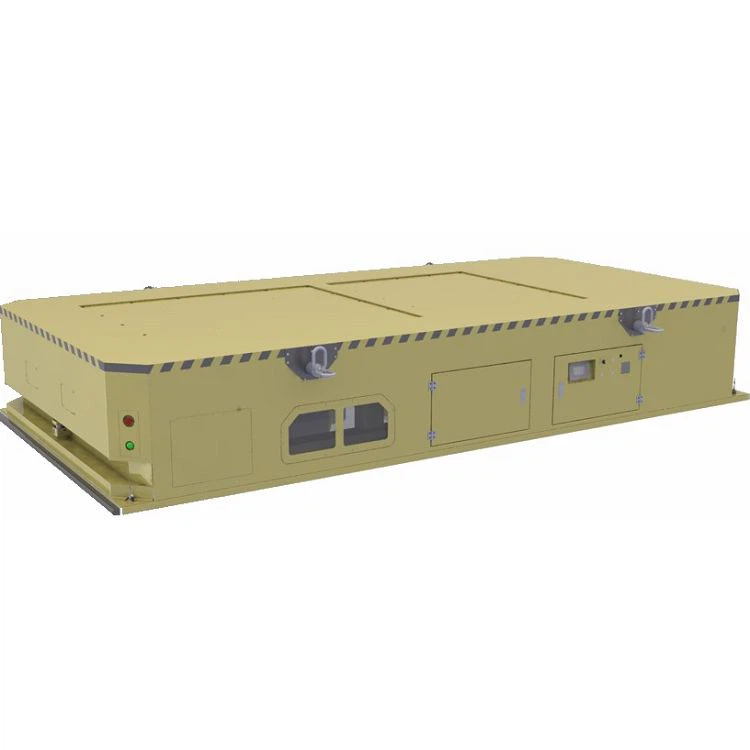

The control units are also designed to be energy - efficient. They use low - power microprocessors that can perform complex tasks with minimal energy consumption. Additionally, the sensors on the AGVs are optimized to only use power when they are actively sensing. This all - around use of energy - efficient components contributes to the overall energy - saving performance of the AGVs.
5. Sleep Mode and Standby Optimization
To further conserve energy, our AGVs are equipped with a sleep mode and standby optimization feature. When the AGV is not in use for a certain period, it automatically enters a sleep mode. In this mode, most of the components are powered down, except for the essential ones that monitor the environment and wait for a wake - up signal.
Standby optimization goes a step further. Even when the AGV is in a standby state but may be required to start operating soon, it adjusts its power consumption based on the expected time of activation. This ensures that the AGV is ready to perform its tasks when needed, while minimizing energy consumption during idle periods. This feature can save a significant amount of energy in long - term operations, especially in assembly lines with intermittent usage patterns.
Conclusion
In conclusion, our Flexible Assembly Line AGVs are designed with a variety of energy - saving features that not only benefit the environment but also help our customers reduce their operational costs. The intelligent route planning, regenerative braking, power management systems, energy - efficient components, and sleep mode/standby optimization all work together to make our AGVs some of the most energy - efficient solutions in the market.
If you are interested in learning more about our Flexible Assembly Line AGV, Unmanned Conveyor AGVs or Magenetic Strip Navigation AGVs, please feel free to reach out to us for a detailed discussion on how these energy - saving features can be tailored to your specific assembly line requirements. We are ready to assist you in making your manufacturing processes more sustainable and cost - effective.
References
[1] Smith, J. (2021). "Optimizing AGV Routes for Energy Efficiency". Journal of Manufacturing Technology, 15(2), 34 - 42.
[2] Johnson, A. (2022). "Regenerative Braking in Automated Guided Vehicles: A Review". International Journal of Energy Management, 22(3), 56 - 64.
[3] Brown, C. (2020). "Power Management Strategies for Energy - Efficient AGVs". Proceedings of the International Conference on Industrial Automation, 189 - 195.


