


In today's fast - paced industrial landscape, the pursuit of enhanced work efficiency is a top priority for businesses across various sectors. Unmanned Conveyor Automated Guided Vehicles (AGVs) have emerged as a game - changer in this regard. As a supplier of Unmanned Conveyor AGVs, I have witnessed firsthand how these innovative machines are revolutionizing the way industries operate.
1. Understanding Unmanned Conveyor AGVs
Unmanned Conveyor AGVs are self - guided vehicles equipped with conveyor systems. They are designed to transport materials, products, or components within a facility without the need for human intervention. These AGVs follow pre - defined paths, which can be set up using various navigation technologies such as magnetic strip navigation, laser navigation, or vision - based navigation.
The Unmanned Conveyor AGVs we offer are highly customizable. They can be tailored to different load capacities, conveyor types (roller, belt, etc.), and operating environments. This flexibility makes them suitable for a wide range of industries, including manufacturing, warehousing, logistics, and automotive.
2. How Unmanned Conveyor AGVs Improve Work Efficiency
2.1 Elimination of Manual Labor
One of the most significant ways Unmanned Conveyor AGVs improve work efficiency is by eliminating the need for manual material handling. In traditional manufacturing or warehousing settings, workers spend a considerable amount of time moving products from one location to another. This not only consumes human resources but also increases the risk of errors and injuries.
With Unmanned Conveyor AGVs, materials can be transported automatically. Workers can then focus on more value - added tasks such as quality control, production operations, or customer service. For example, in a large - scale manufacturing plant, AGVs can continuously move raw materials from the storage area to the production line, allowing workers to concentrate on assembling products. This division of labor significantly improves overall productivity.
2.2 24/7 Operation
Unlike human workers who need breaks, rest, and are subject to working hours regulations, Unmanned Conveyor AGVs can operate 24 hours a day, 7 days a week. They do not get tired, bored, or distracted, ensuring a consistent and continuous flow of materials.
In a warehousing environment, for instance, AGVs can work throughout the night to restock shelves or prepare orders for the next day's shipments. This non - stop operation reduces the time required to complete tasks and can lead to faster order fulfillment, which is crucial for meeting customer demands in a timely manner.
2.3 Precise and Consistent Movement
Unmanned Conveyor AGVs are programmed to follow precise paths and perform tasks with high accuracy. They can stop, start, and turn at exact locations, ensuring that materials are delivered to the right place at the right time.
In an automotive assembly line, AGVs can transport car parts to the assembly stations with millimeter - level precision. This consistency reduces the likelihood of misalignments or errors during the assembly process, which in turn improves the quality of the final product. Moreover, the ability to move materials precisely also minimizes the risk of collisions and damage to goods, saving costs associated with product loss and repairs.
2.4 Integration with Existing Systems
Our Unmanned Conveyor AGVs can be easily integrated with other automated systems within a facility, such as conveyor belts, robotic arms, and warehouse management systems (WMS). This integration allows for seamless communication and coordination between different parts of the production or logistics process.
For example, when integrated with a WMS, AGVs can receive real - time instructions on which products to pick up and where to deliver them. They can also update the system on their current status, such as the location of a load or the remaining battery life. This level of integration streamlines the entire operation, reduces manual data entry, and improves the overall efficiency of the supply chain.
2.5 Adaptability to Changing Workflows
Businesses often need to adapt to changing market demands, production schedules, or facility layouts. Unmanned Conveyor AGVs offer a high degree of adaptability in this regard. Their paths can be easily reprogrammed, and new tasks can be assigned with relative ease.
In a manufacturing plant that is introducing a new product line, the AGV system can be quickly reconfigured to accommodate the new production requirements. This flexibility allows businesses to respond promptly to changes without significant disruptions to their operations, ensuring that work efficiency is maintained even in dynamic environments.
3. Types of Unmanned Conveyor AGVs and Their Efficiency Benefits
3.1 All Direction Heavy Load AGVs
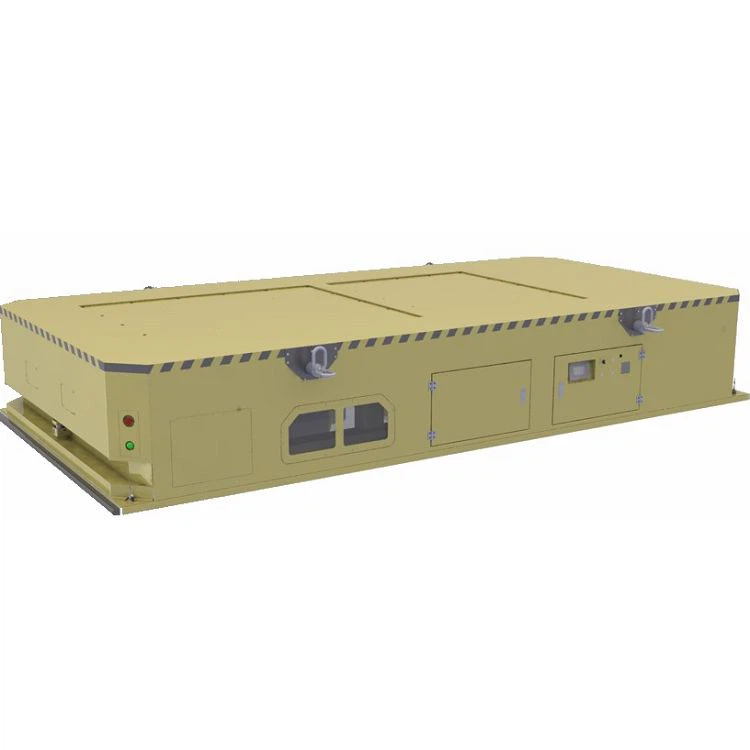
All Direction Heavy Load AGVs are designed to handle large and heavy loads. They can move in multiple directions, including forward, backward, sideways, and diagonally. This multi - directional movement capability is particularly useful in tight spaces or when precise positioning of heavy loads is required.
In a steel manufacturing plant, for example, these AGVs can transport large steel coils to different processing areas. Their ability to move in all directions allows them to navigate through narrow aisles and place the coils accurately at the required locations. This reduces the time and effort required for manual handling of heavy loads and improves the overall efficiency of the steel processing operations.
3.2 Magenetic Strip Navigation AGVs
Magenetic Strip Navigation AGVs use magnetic strips installed on the floor to guide their movement. This type of navigation is relatively simple, cost - effective, and reliable.
In a medium - sized warehouse, Magenetic Strip Navigation AGVs can be used to transport pallets of goods. The magnetic strips provide a stable and accurate path for the AGVs, ensuring that they move smoothly and consistently. This type of AGV is easy to install and maintain, which reduces downtime and increases the overall efficiency of the warehousing operations.
4. Case Studies: Real - World Examples of Efficiency Improvements
4.1 Manufacturing Company A
Manufacturing Company A was facing challenges with slow material handling processes and high labor costs. They implemented our Unmanned Conveyor AGVs in their production line. The AGVs were used to transport components between different workstations.
After the implementation, the company saw a significant reduction in the time required to move materials. The production cycle time was reduced by 30%, and labor costs were cut by 25%. Workers were able to focus on more complex tasks, leading to an improvement in product quality.

4.2 Logistics Company B
Logistics Company B was struggling with order fulfillment delays and high error rates in their warehouse. They introduced our Unmanned Conveyor AGVs integrated with their WMS. The AGVs were responsible for picking and transporting orders from the storage area to the packing stations.
As a result, the order fulfillment time was reduced by 40%, and the error rate was decreased by 50%. The company was able to handle a larger volume of orders with the same number of employees, leading to a substantial increase in overall efficiency and customer satisfaction.
5. Conclusion and Call to Action
Unmanned Conveyor AGVs offer a multitude of benefits that can significantly improve work efficiency in various industries. From eliminating manual labor and enabling 24/7 operation to providing precise movement and seamless integration with existing systems, these innovative machines are transforming the way businesses operate.
If you are looking to enhance the efficiency of your production or logistics processes, our Unmanned Conveyor AGVs could be the solution you need. We invite you to reach out to us for more information and to discuss how our AGV solutions can be tailored to your specific requirements. Contact us to start a procurement discussion and take your business to the next level of efficiency.
References
- "Automated Guided Vehicle Systems: Technology and Applications" by John Doe
- "The Impact of Unmanned Conveyor AGVs on Industrial Productivity" by Jane Smith
- Industry reports from leading market research firms on the adoption of AGVs in manufacturing and logistics.


