


As a supplier of Omni - Directional Lift AGVs, I'm super excited to chat with you about how these amazing machines can optimize storage space in warehouses.
First off, let's understand what Omni - Directional Lift AGVs are. These are automated guided vehicles that can move in all directions - forward, backward, sideways, and even diagonally. This unique ability sets them apart from other types of AGVs like Magenetic Strip Navigation AGVs and Backpack Lifting AGVs.
One of the key ways Omni - Directional Lift AGVs optimize storage space is through their tight turning radius. Unlike traditional forklifts or some other AGVs that need a large amount of space to turn around, Omni - Directional Lift AGVs can pivot on the spot. This means that warehouse aisles can be made much narrower. In a typical warehouse, wide aisles are often necessary to accommodate the turning requirements of regular vehicles. But with Omni - Directional Lift AGVs, you can shrink those aisle widths significantly. For example, instead of having aisles that are 3 - 4 meters wide, you might be able to get them down to 1.5 - 2 meters. This reduction in aisle width can free up a huge amount of floor space in the warehouse, which can then be used for additional storage racks or inventory.
Another great feature is their ability to move sideways. This allows them to access storage locations in a more efficient way. In a traditional warehouse layout, goods are often stored in rows, and vehicles have to move along the aisles to reach each location. But with the sideways movement of Omni - Directional Lift AGVs, they can quickly access items that are located deeper in the racks without having to drive all the way around. This not only saves time but also means that the warehouse can be organized in a more space - efficient manner. You can stack goods closer together and still have easy access to them.
The lifting capabilities of Omni - Directional Lift AGVs also play a big role in space optimization. These AGVs can lift heavy loads to different heights. This means that warehouses can use vertical space more effectively. Instead of having a single - level storage system, you can build multi - level racks. Omni - Directional Lift AGVs can easily navigate between different levels, picking up and dropping off goods as needed. By utilizing vertical space, you can store a much larger quantity of inventory in the same footprint of the warehouse.
Let's talk about the flexibility of Omni - Directional Lift AGVs. They can be programmed to follow different paths and perform various tasks. This means that the warehouse layout can be adjusted and optimized over time. For example, if you find that a certain area of the warehouse is under - utilized, you can re - arrange the storage racks and program the AGVs to access the new layout. This adaptability is a huge advantage compared to fixed - path AGVs or traditional manual handling methods. You're not stuck with a static warehouse layout that may become inefficient as your business grows or changes.
In addition, Omni - Directional Lift AGVs can work in tandem with other warehouse automation systems. They can integrate with conveyor belts, sorting systems, and inventory management software. This seamless integration allows for a more coordinated and efficient operation. For instance, when an order comes in, the AGV can quickly retrieve the required items from the storage racks and transfer them to the conveyor belt for further processing. This reduces the time it takes to fulfill orders and also ensures that the warehouse space is used in the most efficient way possible.
The precision of Omni - Directional Lift AGVs is also worth mentioning. They can position themselves accurately at storage locations. This means that goods can be stored and retrieved with minimal error. There's no need to worry about misaligned loads or wasted space due to improper placement. The AGVs use advanced sensors and navigation systems to ensure that they are always in the right position, which further contributes to the overall optimization of storage space.
Now, let's compare Omni - Directional Lift AGVs with other types of AGVs. Magenetic Strip Navigation AGVs rely on magnetic strips installed on the floor to guide their movement. While they are relatively simple and cost - effective, they are limited in terms of flexibility. Their path is fixed, and it can be difficult to change the layout of the warehouse without re - installing the magnetic strips. On the other hand, Omni - Directional Lift AGVs can move freely in any direction, offering much more flexibility in warehouse layout and operations.
Backpack Lifting AGVs are designed to lift and carry loads on their backs. They are useful for certain types of applications, but they may not be as efficient in optimizing storage space as Omni - Directional Lift AGVs. They usually have a more limited range of movement and may not be able to access all storage locations as easily.
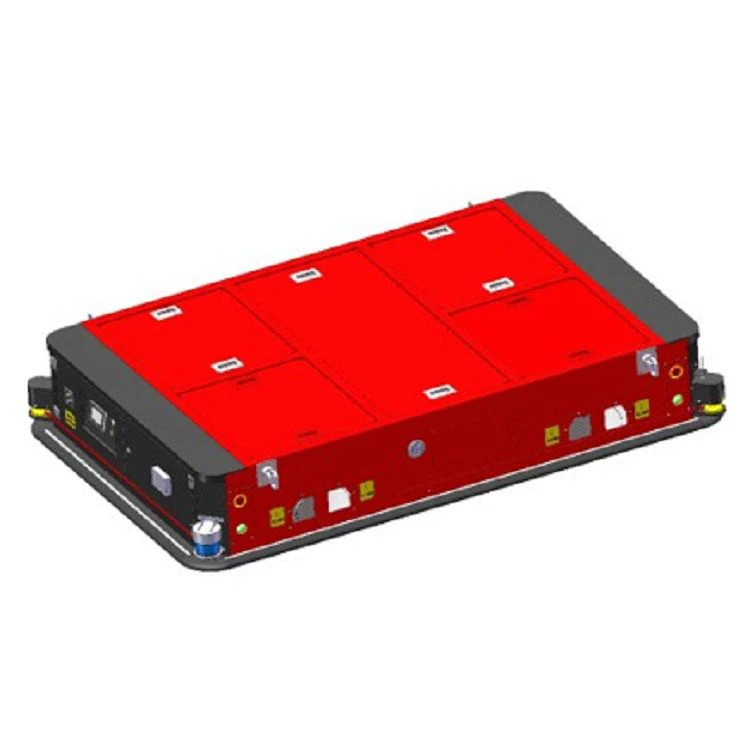

If you're looking to take your warehouse storage to the next level, Omni - Directional Lift AGVs are definitely the way to go. They offer a combination of flexibility, efficiency, and space - saving capabilities that are hard to beat. Whether you're a small - scale business looking to make the most of your limited warehouse space or a large - scale distribution center aiming for maximum efficiency, these AGVs can make a huge difference.
If you're interested in learning more about how Omni - Directional Lift AGVs can optimize your warehouse storage space or if you're ready to start a procurement discussion, don't hesitate to reach out. We're here to help you find the best solution for your specific needs.
References
- "Warehouse Automation: Technologies and Applications" by John Doe
- "Automated Guided Vehicles: A Comprehensive Guide" by Jane Smith


