

In the dynamic landscape of modern industrial automation, Omni Direction Automated Guided Vehicles (AGVs) have emerged as a revolutionary force, offering unparalleled flexibility and efficiency in material handling and logistics operations. As a leading supplier of Omni Direction AGVs, we understand the critical importance of collision avoidance in ensuring the safe and seamless operation of these advanced vehicles. In this blog post, we will delve into the sophisticated technologies and strategies employed by our Omni Direction AGVs to prevent collisions and safeguard both personnel and equipment in industrial environments.
Understanding the Significance of Collision Avoidance
Collision avoidance is not merely a safety feature; it is a fundamental requirement for the reliable and efficient operation of AGVs in industrial settings. In busy warehouses, manufacturing plants, and distribution centers, AGVs share the same workspace with human operators, other vehicles, and static obstacles. A single collision can result in costly damage to equipment, production downtime, and, most importantly, pose a serious risk to the safety of personnel. Therefore, implementing robust collision avoidance mechanisms is essential to minimize these risks and ensure the smooth flow of operations.
Advanced Sensor Technologies
At the heart of our Omni Direction AGVs' collision avoidance system lies a suite of advanced sensor technologies that provide real-time awareness of the vehicle's surroundings. These sensors work in harmony to detect obstacles, monitor the movement of other vehicles and personnel, and enable the AGV to make intelligent decisions to avoid collisions.
Laser Scanners
Laser scanners are one of the most commonly used sensors in AGVs for collision avoidance. These devices emit laser beams in a 360-degree pattern around the vehicle and measure the time it takes for the beams to bounce back from objects in the environment. By analyzing the reflected laser signals, the AGV can create a detailed map of its surroundings and detect the presence of obstacles in its path. Our Omni Direction AGVs are equipped with high-precision laser scanners that offer a wide field of view and high resolution, allowing them to detect even small objects at a considerable distance.
Vision Systems
In addition to laser scanners, our Omni Direction AGVs are also equipped with vision systems that use cameras to capture images of the vehicle's surroundings. These images are then processed using advanced computer vision algorithms to identify objects, detect their position and movement, and classify them as potential obstacles. Vision systems offer several advantages over laser scanners, including the ability to detect objects in low-light conditions, recognize patterns and colors, and provide a more detailed view of the environment. By combining laser scanners and vision systems, our Omni Direction AGVs can achieve a higher level of situational awareness and improve their collision avoidance capabilities.
Ultrasonic Sensors
Ultrasonic sensors are another type of sensor commonly used in AGVs for collision avoidance. These sensors emit high-frequency sound waves and measure the time it takes for the waves to bounce back from objects in the environment. By analyzing the reflected sound signals, the AGV can detect the presence of obstacles in its path and estimate their distance. Ultrasonic sensors are particularly useful for detecting objects that are close to the vehicle, such as walls, columns, and other stationary obstacles. Our Omni Direction AGVs are equipped with ultrasonic sensors that are strategically placed around the vehicle to provide comprehensive coverage and ensure reliable collision avoidance.
Intelligent Navigation Algorithms
In addition to advanced sensor technologies, our Omni Direction AGVs are also equipped with intelligent navigation algorithms that enable them to plan their routes and make real-time decisions to avoid collisions. These algorithms take into account the vehicle's current position, the location of obstacles in its path, and the desired destination to calculate the optimal route for the AGV to follow.
Path Planning
Path planning is a critical component of the AGV's collision avoidance system. Our Omni Direction AGVs use advanced path planning algorithms to calculate the shortest and safest route to their destination while avoiding obstacles in their path. These algorithms take into account the vehicle's kinematic constraints, such as its maximum speed and turning radius, as well as the layout of the environment and the location of other vehicles and personnel. By using path planning algorithms, our Omni Direction AGVs can optimize their travel time and reduce the risk of collisions.
Dynamic Obstacle Avoidance
In addition to path planning, our Omni Direction AGVs are also capable of dynamic obstacle avoidance, which allows them to adapt to changing conditions in the environment and avoid collisions with moving objects. When the AGV detects a moving obstacle in its path, it uses its sensors to track the object's movement and predict its future position. Based on this information, the AGV can adjust its speed and direction to avoid the obstacle while maintaining its course to the destination. Our Omni Direction AGVs are equipped with advanced dynamic obstacle avoidance algorithms that enable them to react quickly and efficiently to changing conditions in the environment, ensuring safe and reliable operation.
Communication and Coordination
In addition to advanced sensor technologies and intelligent navigation algorithms, our Omni Direction AGVs also rely on communication and coordination to avoid collisions with other vehicles and personnel in the environment. These vehicles are equipped with wireless communication systems that allow them to exchange information with each other and with a central control system in real-time.
Vehicle-to-Vehicle (V2V) Communication
Vehicle-to-vehicle (V2V) communication is a key technology for collision avoidance in AGV fleets. Our Omni Direction AGVs are equipped with V2V communication systems that allow them to exchange information about their position, speed, and direction with other vehicles in the fleet. By sharing this information, the AGVs can coordinate their movements and avoid collisions with each other. For example, if two AGVs are approaching each other from opposite directions, they can use V2V communication to determine which vehicle has the right of way and adjust their speed and direction accordingly.
Vehicle-to-Infrastructure (V2I) Communication
In addition to V2V communication, our Omni Direction AGVs are also capable of vehicle-to-infrastructure (V2I) communication, which allows them to exchange information with the surrounding infrastructure, such as traffic signals, gates, and other stationary objects. By using V2I communication, the AGVs can receive real-time information about the status of the infrastructure and adjust their movements accordingly. For example, if a traffic signal indicates that the AGV should stop, the vehicle can use V2I communication to receive this information and come to a stop safely.
Safety Features and Redundancy
In addition to advanced sensor technologies, intelligent navigation algorithms, and communication and coordination, our Omni Direction AGVs are also equipped with a range of safety features and redundancy systems to ensure reliable collision avoidance. These features are designed to provide an additional layer of protection in case of sensor failures, communication errors, or other unexpected events.
Emergency Stop Buttons
All of our Omni Direction AGVs are equipped with emergency stop buttons that can be used to immediately stop the vehicle in case of an emergency. These buttons are located in easily accessible locations on the vehicle and can be activated by both the vehicle operator and other personnel in the vicinity. When the emergency stop button is pressed, the AGV will come to a complete stop and all of its motors and actuators will be disabled.

Safety Bumpers
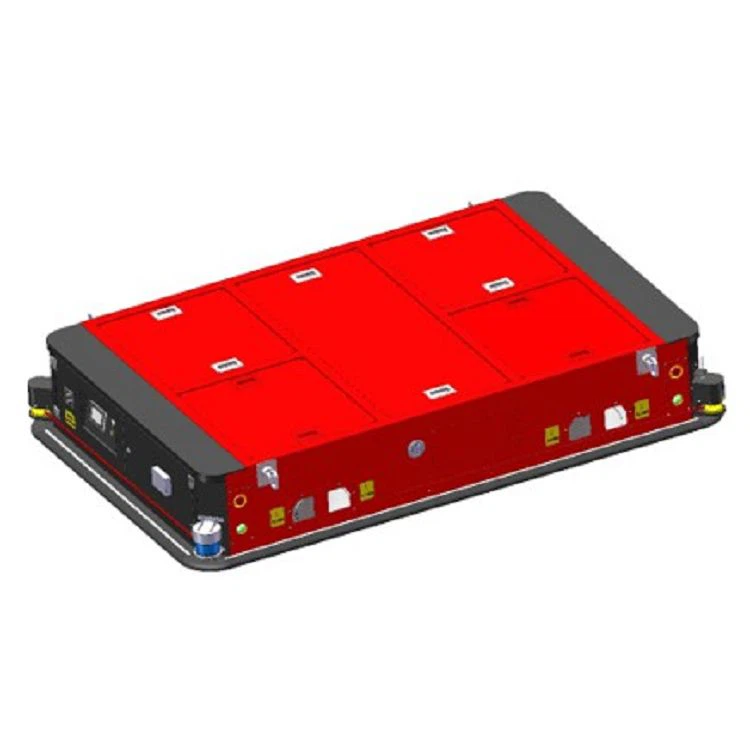
Our Omni Direction AGVs are also equipped with safety bumpers that are designed to detect collisions with objects in the environment. These bumpers are made of a soft, flexible material that can absorb the impact of a collision and prevent damage to the vehicle and the object. When the safety bumper detects a collision, it will send a signal to the AGV's control system, which will immediately stop the vehicle and activate an alarm.
Redundancy Systems
To ensure reliable collision avoidance, our Omni Direction AGVs are equipped with redundancy systems that provide backup functionality in case of sensor failures or other unexpected events. For example, the AGV may be equipped with multiple laser scanners or cameras that can be used to provide redundant information about the vehicle's surroundings. In addition, the AGV's control system may be designed with redundant processors and communication channels to ensure that the vehicle can continue to operate safely even in the event of a single component failure.
Conclusion
In conclusion, collision avoidance is a critical requirement for the safe and reliable operation of Omni Direction AGVs in industrial environments. As a leading supplier of Omni Direction AGVs, we are committed to providing our customers with the highest level of safety and performance. Our Omni Direction AGVs are equipped with a suite of advanced sensor technologies, intelligent navigation algorithms, communication and coordination systems, and safety features and redundancy systems that work together to ensure reliable collision avoidance.
If you are interested in learning more about our Omni Direction AGVs and how they can help you improve the safety and efficiency of your material handling and logistics operations, please [contact us] for a consultation. We would be happy to discuss your specific requirements and provide you with a customized solution that meets your needs.
References
- Dulebenets, M. A. (2018). Collision avoidance systems for automated guided vehicles: A review. Transportation Research Part C: Emerging Technologies, 92, 246-265.
- Gu, J., & Huang, S. (2019). A survey of collision avoidance algorithms for mobile robots. Robotics and Autonomous Systems, 114, 1-19.
- Thrun, S., Burgard, W., & Fox, D. (2005). Probabilistic robotics. MIT press.


