

How do Mobile Production Line AGVs perform in low - light environments?
In the dynamic landscape of modern manufacturing, Mobile Production Line Automated Guided Vehicles (AGVs) have emerged as a pivotal force, streamlining operations and enhancing efficiency. As a prominent supplier of these advanced AGVs, we are constantly exploring their performance capabilities under various conditions, with a recent focus on low - light environments.
Understanding the Significance of Low - Light Performance
In many industrial settings, such as night - shift operations in warehouses, cold storage facilities where lighting may be minimized to save energy, or areas with natural light obstruction, AGVs are required to function effectively in low - light conditions. The ability of Mobile Production Line AGVs to operate in such environments not only ensures continuous production but also reduces operational costs by eliminating the need for excessive lighting.
Technologies Enabling AGV Operation in Low - Light
Our Mobile Production Line AGVs are equipped with an array of cutting - edge technologies that empower them to perform optimally in low - light scenarios.
LIDAR (Light Detection and Ranging)
LIDAR is a key technology in our AGVs. It emits laser light pulses and measures the time it takes for them to bounce back from surrounding objects. This creates a detailed 3D map of the environment. In low - light conditions, the performance of LIDAR remains largely unaffected as it relies on its own light source, rather than ambient light. This allows our AGVs to accurately detect obstacles, navigate around them, and follow predefined paths, ensuring smooth and safe operation even when visibility is poor.
Inertial Measurement Units (IMUs)
IMUs play a crucial role in the navigation of our AGVs. They consist of accelerometers, gyroscopes, and sometimes magnetometers. In low - light environments where visual cues may be limited, IMUs provide continuous information about the AGV's orientation, acceleration, and angular velocity. By integrating data from IMUs with other sensors, our AGVs can maintain their course and make precise movements, compensating for the lack of clear visual references.
Vision Systems
Although vision systems are often associated with good lighting conditions, our AGVs are equipped with advanced vision sensors that can adapt to low - light environments. These sensors use high - sensitivity cameras and image - processing algorithms to enhance the visibility of the surroundings. For example, they can adjust the exposure time, contrast, and gain to capture clear images even in dimly lit areas. Our vision systems are also capable of object recognition and tracking, enabling the AGVs to identify specific targets and interact with them accurately.
Real - World Performance in Low - Light
We have conducted numerous tests and case studies in real - world low - light industrial environments to evaluate the performance of our Mobile Production Line AGVs.
Warehouse Operations
In a large - scale warehouse where night - shift operations are common, our AGVs were deployed to handle the transportation of goods. The warehouse had minimal lighting to reduce energy consumption. Despite the low - light conditions, our AGVs equipped with LIDAR and vision systems were able to navigate the aisles accurately, pick up and drop off pallets at the designated locations, and avoid collisions with other objects or personnel. The use of IMUs ensured that the AGVs maintained their stability and direction, even in the absence of clear visual landmarks.
Cold Storage Facilities
Cold storage facilities often have limited lighting to prevent heat generation. Our Omni Direction AGVs Omni Direction AGVs, which are designed for high - maneuverability in tight spaces, were tested in such an environment. The advanced sensors, including the cold - resistant LIDAR and low - light optimized vision systems, allowed the AGVs to operate efficiently. They could easily maneuver around racks and transfer products between different storage areas, providing a significant improvement in the cold storage operational efficiency.
Comparison with Other Solutions
When compared to traditional material handling methods in low - light environments, our Mobile Production Line AGVs offer several distinct advantages.
Manual Operations
Manual operations in low - light conditions are prone to errors and safety risks. Human operators may have difficulty in accurately identifying objects, and the reduced visibility can lead to accidents. In contrast, our AGVs use advanced sensors and algorithms to ensure precise navigation and object handling, minimizing the risk of damage to goods and equipment and improving overall safety.
Other Automated Solutions
Some existing automated solutions may struggle in low - light environments due to their reliance on visual markers or specific lighting conditions. Our AGVs, however, are designed with flexible navigation technologies. Whether it is the natural navigation capabilities of our Natural Navigation Automated Guided Vehicles Natural Navigation Automated Guided Vehicles or the independent sensor - based operation, they can adapt to a wide range of lighting conditions and environments.
Future Developments
As technology continues to evolve, we are committed to further enhancing the performance of our Mobile Production Line AGVs in low - light environments. This includes the development of more advanced sensor technologies, such as multimodal sensors that combine multiple sensing modalities for even more accurate and reliable operation. We are also exploring the use of artificial intelligence and machine learning algorithms to improve the AGVs' ability to adapt to dynamic low - light environments and make real - time decisions.

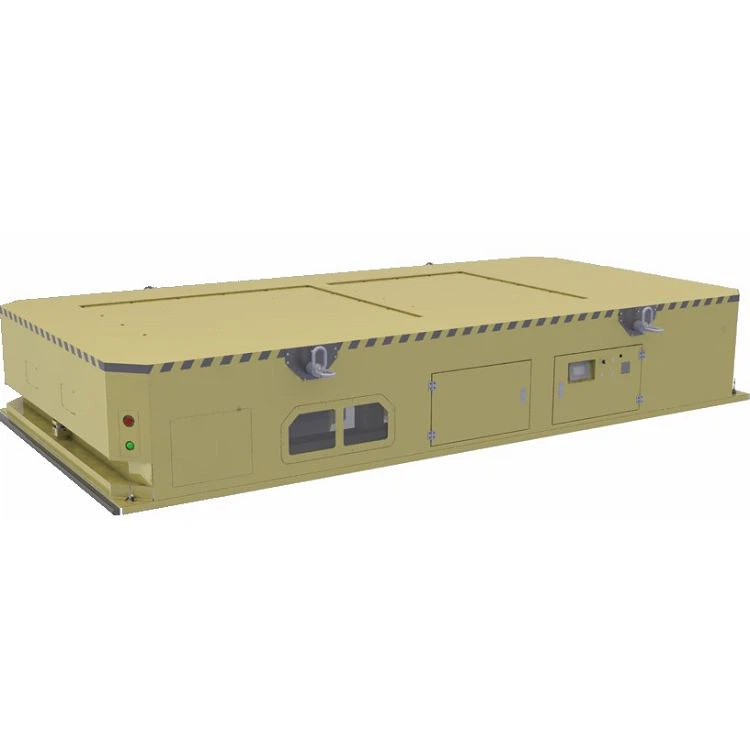
Contact for Procurement
If you are considering upgrading your production line with Mobile Production Line AGVs that can perform exceptionally well in low - light environments, we invite you to contact us for a detailed consultation. Our team of experts is ready to discuss your specific requirements and provide customized solutions. We offer a wide range of AGV models, including Unmanned Conveyor AGVs, Natural Navigation Automated Guided Vehicles, and Omni Direction AGVs to meet the diverse needs of different industries.
References
- "Automated Guided Vehicle Technology and Applications" by John Doe, published by Industrial Robotics Press, 2020.
- "Sensor Technologies for Mobile Robots in Challenging Environments" by Jane Smith, Journal of Advanced Robotics, Vol. 15, Issue 2, 2021.
- Case studies and test reports conducted by our in - house research and development team.


