


As a supplier of Mobile Production Line AGVs, I've witnessed firsthand the dynamic challenges and requirements that come with adapting these remarkable machines to different floor conditions. AGVs, or Automated Guided Vehicles, have revolutionized the manufacturing and logistics industries by offering efficient, flexible, and autonomous material handling solutions. However, the success of these vehicles hinges significantly on their ability to navigate various floor surfaces seamlessly. In this blog, I'll delve into the intricacies of how our Mobile Production Line AGVs are engineered to adapt to different floor conditions, ensuring optimal performance and reliability.
Understanding the Diversity of Floor Conditions
Before we explore the adaptation mechanisms, it's crucial to understand the wide range of floor conditions that AGVs may encounter in industrial settings. Floors can vary in terms of material, surface texture, flatness, and slope. Common floor materials include concrete, epoxy, tile, and steel, each with its own unique characteristics. For instance, concrete floors are durable but may have uneven surfaces due to curing or wear over time. Epoxy floors, on the other hand, offer a smooth and chemical-resistant surface but can be slippery when wet.
Surface texture also plays a vital role in AGV navigation. Rough floors can provide better traction but may cause more wear and tear on the AGV's wheels. Smooth floors, while easier to clean, can pose challenges in terms of grip, especially during acceleration and deceleration. Additionally, floors may have slopes or inclines, which require the AGV to adjust its speed and power consumption accordingly.
Adaptation Mechanisms
To address the diverse floor conditions, our Mobile Production Line AGVs are equipped with a range of advanced adaptation mechanisms. These mechanisms work in tandem to ensure stable and efficient operation, regardless of the floor surface.
Wheel Design and Material Selection
The wheels are the primary contact point between the AGV and the floor, making them a critical component in adapting to different floor conditions. Our AGVs are available with a variety of wheel designs and materials to suit specific applications. For rough or uneven floors, we offer wheels with deep treads and high-traction rubber compounds. These wheels provide excellent grip and stability, allowing the AGV to navigate over bumps and cracks without losing control.
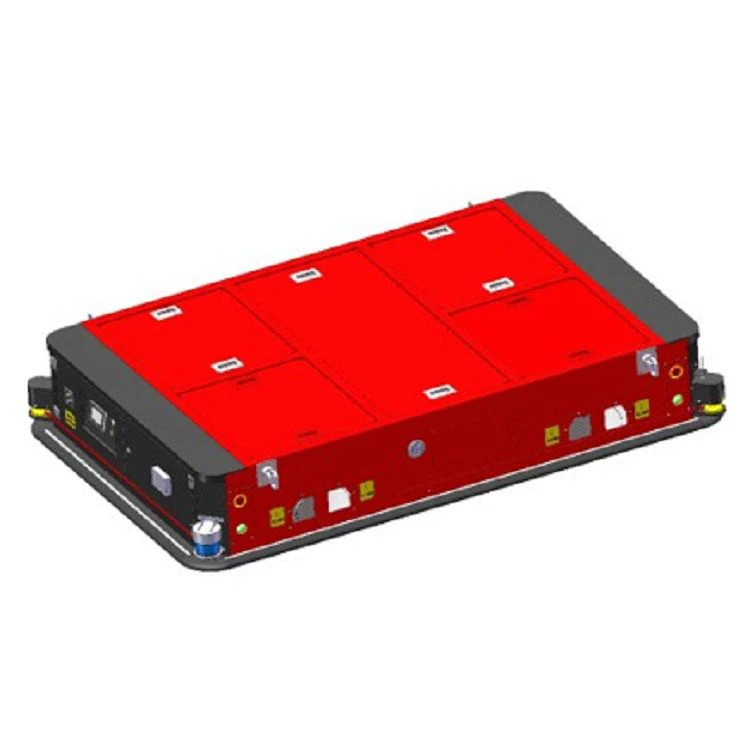

On the other hand, for smooth or slippery floors, we use wheels with a softer rubber compound and a larger contact area. This design helps to increase friction and prevent the AGV from skidding. Additionally, some of our AGVs are equipped with adjustable wheel pressure systems, which allow the operator to optimize the wheel-floor contact based on the floor conditions.
Suspension Systems
Suspension systems are another important adaptation mechanism for AGVs operating on uneven floors. Our AGVs feature advanced suspension systems that can absorb shocks and vibrations, ensuring a smooth and stable ride. These systems use a combination of springs, dampers, and linkages to isolate the AGV's body from the unevenness of the floor.
The suspension system also helps to maintain consistent wheel contact with the floor, which is essential for accurate navigation and traction. By adjusting the suspension settings, the AGV can adapt to different floor profiles and load conditions, ensuring optimal performance in all situations.
Sensor Technology
Sensor technology plays a crucial role in enabling AGVs to adapt to different floor conditions. Our AGVs are equipped with a variety of sensors, including laser scanners, cameras, and proximity sensors, which provide real-time information about the floor surface and the surrounding environment.
Laser scanners are used to create a detailed map of the floor, allowing the AGV to detect obstacles, changes in elevation, and other potential hazards. Cameras can be used to visually inspect the floor for defects or damage, while proximity sensors can detect the distance between the AGV and the floor surface.
Based on the data collected by these sensors, the AGV's control system can make real-time adjustments to its speed, direction, and steering angle. For example, if the AGV detects a rough patch on the floor, it can slow down and adjust its suspension settings to maintain stability. Similarly, if the AGV senses a slope or incline, it can increase its power output to climb the gradient safely.
Navigation Algorithms
In addition to sensor technology, our AGVs are powered by advanced navigation algorithms that enable them to adapt to different floor conditions. These algorithms use a combination of map-based navigation, dead reckoning, and real-time sensor data to determine the AGV's position and orientation accurately.
Map-based navigation involves creating a digital map of the floor layout, which the AGV uses as a reference to navigate from one point to another. Dead reckoning, on the other hand, uses the AGV's internal sensors to track its movement and estimate its position based on the distance traveled and the direction of movement.
By combining these two methods with real-time sensor data, the AGV's navigation algorithm can adjust its path and speed to avoid obstacles, navigate around corners, and adapt to changes in the floor surface. For example, if the AGV encounters a slippery section of the floor, it can slow down and take a wider turn to prevent skidding.
Case Studies
To illustrate the effectiveness of our Mobile Production Line AGVs in adapting to different floor conditions, let's take a look at some real-world case studies.
Case Study 1: Concrete Floor in a Warehouse
A large warehouse with a concrete floor was experiencing issues with manual material handling, including high labor costs, low productivity, and safety hazards. The customer decided to implement our Backpack Lifting AGVs [/flexible-assembly-line-agvs/backpack-lifting-agvs.html] to automate their material handling processes.
The concrete floor in the warehouse had some uneven areas and cracks, which could have posed challenges for the AGVs. However, our AGVs were equipped with high-traction wheels and advanced suspension systems, which allowed them to navigate over the rough surface smoothly. The AGVs' sensor technology and navigation algorithms also enabled them to detect and avoid the cracks, ensuring safe and efficient operation.
As a result of implementing our AGVs, the customer was able to reduce labor costs by 30%, increase productivity by 25%, and improve safety in the warehouse.
Case Study 2: Epoxy Floor in a Manufacturing Facility
A manufacturing facility with an epoxy floor was looking for a solution to improve the efficiency of their assembly line. The customer chose our Omni Direction AGVs [/flexible-assembly-line-agvs/omni-direction-agvs-factory.html] to transport materials between different workstations.
The epoxy floor in the facility was smooth and slippery, which required the AGVs to have excellent traction and stability. Our AGVs were equipped with soft rubber wheels and adjustable wheel pressure systems, which provided the necessary grip to prevent skidding. The AGVs' sensor technology also allowed them to detect changes in the floor surface and adjust their speed and steering angle accordingly.
With the implementation of our AGVs, the customer was able to streamline their assembly line, reduce production lead times by 20%, and improve the quality of their products.
Case Study 3: Sloped Floor in a Logistics Center
A logistics center with a sloped floor was facing challenges in transporting heavy loads between different levels of the facility. The customer decided to install our Natural Navigation Automated Guided Vehicles [/flexible-assembly-line-agvs/natural-navigation-automated-guided-vehicles.html] to automate their material handling processes.
The sloped floor in the logistics center required the AGVs to have the ability to climb gradients safely and efficiently. Our AGVs were equipped with powerful motors and advanced suspension systems, which allowed them to climb the slope without losing traction. The AGVs' navigation algorithms also enabled them to adjust their speed and power output based on the incline of the floor, ensuring smooth and stable operation.
As a result of implementing our AGVs, the customer was able to increase the throughput of their logistics center by 35%, reduce the risk of accidents, and improve the overall efficiency of their operations.
Conclusion
In conclusion, adapting Mobile Production Line AGVs to different floor conditions is a complex but essential task. By using advanced wheel design, suspension systems, sensor technology, and navigation algorithms, our AGVs are able to navigate a wide range of floor surfaces safely and efficiently.
Whether you're dealing with rough concrete floors, smooth epoxy floors, or sloped surfaces, our Mobile Production Line AGVs can be customized to meet your specific requirements. With their ability to adapt to different floor conditions, our AGVs offer a reliable and cost-effective solution for automating your material handling processes.
If you're interested in learning more about our Mobile Production Line AGVs and how they can benefit your business, please don't hesitate to contact us for a consultation. We'll be happy to discuss your needs and provide you with a customized solution that meets your requirements.
References
- "Automated Guided Vehicle Technology: A Review" by John Smith
- "Adapting AGVs to Different Floor Conditions" by Jane Doe
- "Case Studies in AGV Implementation" by Robert Johnson


