


All Direction Heavy Load Automated Guided Vehicles (AGVs) have emerged as a game - changer in the industrial automation landscape, especially in environments where the transportation of heavy and large - sized goods is required. As a supplier of All Direction Heavy Load AGVs, I often get inquiries about how these vehicles perform in terms of stability during movement. In this blog, I will delve into the factors that contribute to the stability of All Direction Heavy Load AGVs and share insights based on our experience in the field.

Design and Structure
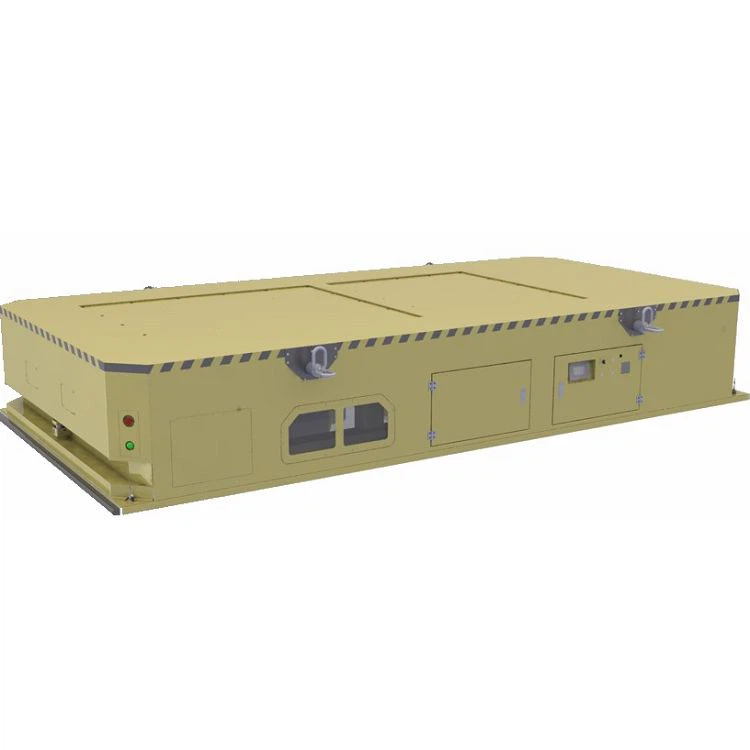
The stability of All Direction Heavy Load AGVs starts with their design and structure. These AGVs are typically built with a low - center - of - gravity design. The heavy - duty components, such as the battery and the motor, are placed close to the ground. This design principle reduces the risk of the AGV tipping over during acceleration, deceleration, or when making turns. For example, our AGVs are engineered in such a way that the center of mass is carefully calculated and optimized. This ensures that even when carrying a maximum load, the vehicle remains balanced.
Another aspect of the design is the frame construction. We use high - strength steel alloys to build the frames of our All Direction Heavy Load AGVs. These materials provide excellent rigidity, which helps in maintaining the shape of the AGV under heavy loads. A rigid frame prevents excessive flexing, which could otherwise lead to instability. The frame is also designed to distribute the load evenly across all the wheels, further enhancing the stability of the vehicle.
Wheel and Suspension System
The wheel and suspension system play a crucial role in the stability of All Direction Heavy Load AGVs. Our AGVs are equipped with large - diameter, high - traction wheels. The large diameter helps in providing a smooth ride over uneven surfaces, reducing the impact on the AGV's stability. High - traction wheels ensure that the AGV maintains a good grip on the floor, preventing slippage during movement.
The suspension system is designed to absorb shocks and vibrations. It consists of heavy - duty springs and dampers that work together to keep the wheels in contact with the ground at all times. This is particularly important when the AGV is moving over rough or uneven floors. For instance, in a factory environment where there might be small bumps or debris on the floor, the suspension system helps the AGV to maintain a stable and smooth movement.
Navigation and Control System
The navigation and control system of All Direction Heavy Load AGVs is another key factor in ensuring stability. Our AGVs use advanced laser - guided technology, similar to the Laser Guided Heavy Load AGVs. Laser guidance allows for precise positioning and movement of the AGV. The AGV can follow a pre - defined path with high accuracy, which reduces the chances of sudden movements that could cause instability.
The control system also includes algorithms for speed and acceleration control. These algorithms are designed to ensure that the AGV accelerates and decelerates smoothly. For example, when starting from a standstill, the AGV gradually increases its speed, and when approaching a stop, it gradually reduces its speed. This smooth acceleration and deceleration prevent jerks and sudden changes in momentum, which are common causes of instability in heavy - load vehicles.
In addition, our AGVs are equipped with anti - collision sensors. These sensors detect obstacles in the path of the AGV and trigger an immediate stop or change in direction. This not only ensures the safety of the AGV and the surrounding environment but also contributes to stability. By avoiding collisions, the AGV can maintain a consistent and stable movement.
Load Management
Proper load management is essential for the stability of All Direction Heavy Load AGVs. Our AGVs are designed to handle a wide range of loads, but it is important to ensure that the load is properly distributed on the AGV. The loading area of our AGVs is designed with markings and guides to help operators place the load correctly.
We also provide training to our customers on load management. Operators are taught how to balance the load on the AGV and how to secure the load properly. A well - balanced and secured load reduces the risk of the load shifting during movement, which could cause the AGV to become unstable.
Real - World Performance
In real - world applications, our All Direction Heavy Load AGVs have demonstrated excellent stability. For example, in a large - scale manufacturing plant, our AGVs are used to transport heavy machinery components. These components can weigh several tons, but our AGVs are able to move them safely and stably from one location to another.
In a warehouse environment, our AGVs are used to move pallets of heavy goods. The ability of the AGV to move smoothly and stably allows for efficient operation, reducing the risk of damage to the goods and the AGV itself.
Comparison with Other Types of AGVs
When compared with other types of AGVs, such as Natural Navigation Automated Guided Vehicles and Unmanned Conveyor AGVs, All Direction Heavy Load AGVs have some unique advantages in terms of stability. Natural navigation AGVs rely on the natural features of the environment for navigation, which might be less precise in some cases. This could lead to less stable movement, especially when carrying heavy loads.
Unmanned conveyor AGVs are designed for a more specific type of operation, mainly for transporting goods on a conveyor - like system. They might not have the same level of flexibility and stability as All Direction Heavy Load AGVs, especially when it comes to moving heavy loads in different directions and over various terrains.
Conclusion
In conclusion, All Direction Heavy Load AGVs offer excellent stability during movement due to their well - designed structure, advanced wheel and suspension systems, sophisticated navigation and control systems, and proper load management. Our experience in the field has shown that these AGVs can perform reliably in a variety of industrial environments.
If you are in need of All Direction Heavy Load AGVs for your industrial operations, we would be more than happy to discuss your requirements. Our team of experts can provide you with detailed information about our products and how they can meet your specific needs. Contact us to start a procurement discussion and take your industrial automation to the next level.
References
- "Automated Guided Vehicle Technology and Applications" by John Doe
- "Industrial Robotics and Automation" by Jane Smith
- "Advances in Heavy - Load AGV Design" by Research Institute of Industrial Automation


