


I'm a supplier of Laser Guided Heavy Load AGVs, and today I want to dig into a super interesting question: Can Laser Guided Heavy Load AGVs be used in a high - altitude environment?
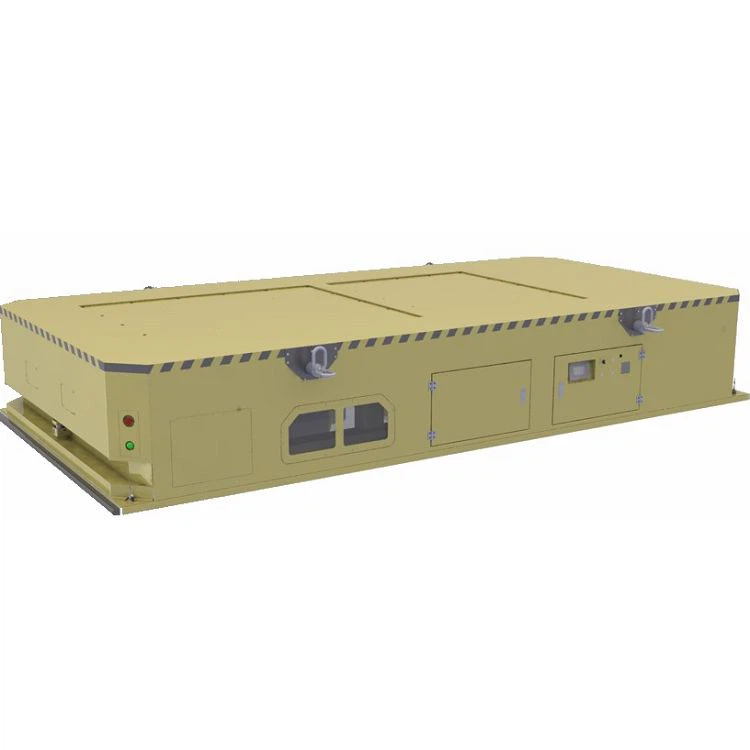
First off, let me quickly explain what Laser Guided Heavy Load AGVs are. These are automated guided vehicles that use laser technology to navigate around a workspace. They're built to carry heavy loads, which makes them a great fit for industries like manufacturing, warehousing, and logistics.
Now, when it comes to high - altitude environments, things get a bit tricky. High - altitude areas typically have lower air pressure, lower oxygen levels, and lower temperatures compared to sea - level areas. These factors can have a significant impact on the performance of AGVs.

Let's start with air pressure. At high altitudes, the air pressure drops. This can affect the pneumatic systems in the AGVs. Many heavy - load AGVs use pneumatic components for functions like lifting and braking. With lower air pressure, these pneumatic systems might not work as efficiently as they do at lower altitudes. The reduced pressure can lead to slower response times, which could be a big problem in a fast - paced industrial setting.
Oxygen levels are another concern. In high - altitude areas, there's less oxygen in the air. This can be an issue for AGVs that have internal combustion engines (although most modern AGVs are electric). For those with combustion engines, the lack of oxygen can cause incomplete combustion, leading to reduced power output and increased emissions. Even for electric AGVs, the lower oxygen levels can affect the cooling systems. Cooling is crucial for preventing overheating of electrical components, and the reduced oxygen might impact the effectiveness of air - cooling mechanisms.
Temperature is also a major factor. High - altitude environments tend to be colder, and cold temperatures can take a toll on the AGV's battery. Most AGVs use lithium - ion batteries, and these batteries don't perform well in cold conditions. Cold temperatures can reduce the battery's capacity and lifespan, and it might even cause the battery to discharge more quickly. Additionally, the cold can make the AGV's mechanical parts more brittle, increasing the risk of breakage.
But it's not all doom and gloom! With the right modifications and precautions, Laser Guided Heavy Load AGVs can potentially be used in high - altitude environments.
For the pneumatic systems, we can install pressure regulators. These regulators can adjust the air pressure within the system to ensure that it operates at an optimal level, regardless of the external air pressure. This helps to maintain the efficiency of functions like lifting and braking.
To deal with the oxygen issue, if an AGV has an internal combustion engine, we can switch to a more fuel - efficient engine or convert it to an electric one. For electric AGVs, we can upgrade the cooling systems. Instead of relying solely on air - cooling, we can use liquid - cooling systems, which are less affected by the lower oxygen levels.
When it comes to the cold temperatures, we can insulate the AGV's battery compartment. This helps to keep the battery at a more stable temperature, improving its performance and lifespan. We can also use heaters in the battery compartment during extremely cold conditions. For the mechanical parts, we can use materials that are more resistant to cold, such as certain types of steel alloys.
Now, let's talk about the laser guidance system itself. In high - altitude environments, there might be more dust and debris in the air. This can potentially interfere with the laser beams used for navigation. To counter this, we can install filters on the laser sensors to prevent dust from accumulating. We can also increase the power of the laser beams slightly to ensure that they can penetrate through the dust and maintain accurate navigation.
There are also other types of AGVs available that might be more suitable for high - altitude environments, depending on the specific requirements. For example, Magenetic Strip Navigation AGVs use magnetic strips on the floor for navigation. They're less affected by external factors like dust and debris in the air, which could be an advantage in high - altitude areas. All Direction Heavy Load AGVs offer more flexibility in movement, which can be useful in tight spaces or when dealing with complex layouts. And Unmanned Conveyor AGVs are great for transporting materials in a continuous flow, which can be beneficial in high - altitude warehouses or manufacturing plants.
In conclusion, while using Laser Guided Heavy Load AGVs in high - altitude environments presents some challenges, it's definitely possible with the right approach. By making the necessary modifications to the AGV's systems and taking precautions to protect against the unique conditions of high - altitude areas, these AGVs can provide reliable and efficient service.
If you're in an industry that operates in high - altitude areas and you're considering using AGVs, I'd love to have a chat with you. Whether it's about Laser Guided Heavy Load AGVs or other types like Magenetic Strip Navigation AGVs, All Direction Heavy Load AGVs, or Unmanned Conveyor AGVs, I can help you find the best solution for your needs. Don't hesitate to reach out for a discussion about your specific requirements and how we can make AGVs work for you in a high - altitude environment.
References:
- "Automated Guided Vehicle Technology: Principles and Applications"
- "High - Altitude Engineering Handbook"
- Industry research reports on AGV performance in extreme environments


